
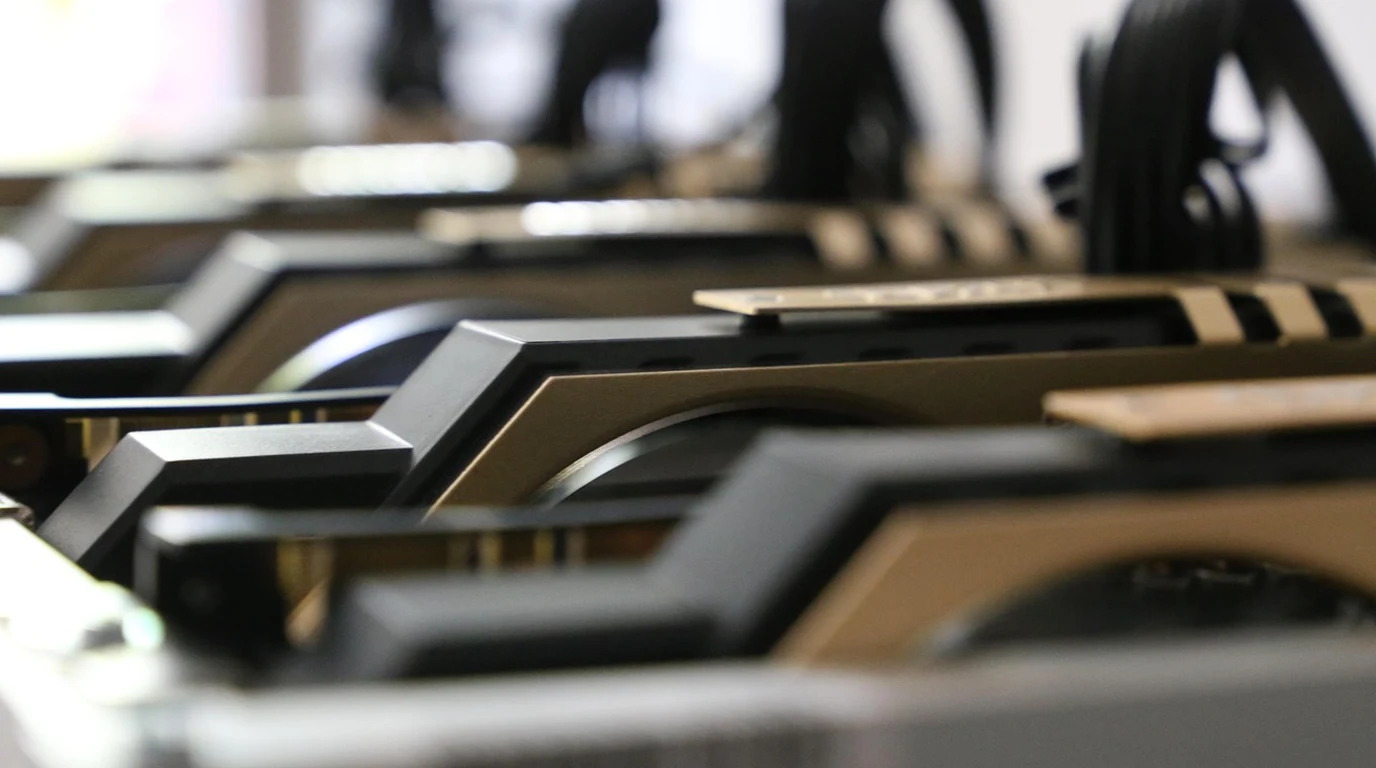
You’re standing at the precipice of a monumental decision, aren’t you? Your organization has invested millions, perhaps tens of millions, in NVIDIA H100 or B200 GPUs. The promise of groundbreaking AI models, faster time-to-market, and unparalleled research breakthroughs hangs in the balance. But all that compute power, all that silicon brilliance, is utterly useless if your network can’t feed it data at the speed of thought. The choice between InfiniBand and RoCE v2 isn’t just a technical specification; it’s a strategic decision that will dictate your cluster’s performance ceiling, your operational sanity, and ultimately, your return on investment. The stakes are incredibly high, and the wrong choice leads to stalled training runs, wasted GPU cycles, and the gnawing frustration of underperforming, expensive hardware.
For large-scale, mission-critical distributed GPU training like Megatron-LM or DeepSpeed on H100/B200 clusters, NVIDIA InfiniBand (NDR/XDR) remains the superior choice due to its native lossless fabric, sub-microsecond latency, and guaranteed performance scaling, despite its proprietary nature and higher upfront cost. RoCE v2 on 400GbE can be viable for smaller, less latency-sensitive clusters with meticulous tuning, but introduces significant operational complexity and performance risks.
Why Your GPU Cluster Network Choice Keeps You Up At Night
Let’s be honest, the core of your anxiety isn’t just about picking a technology; it’s about avoiding the costly trap that 80% of practitioners fall into. They look at the raw bandwidth numbers – 400Gbps, 800Gbps – and assume parity. They see “RDMA” and think the job is done. But the devil, as always, is in the details, specifically in how these networks handle congestion and guarantee data delivery. This isn’t about theoretical maximums; it’s about sustained, predictable performance under the brutal, unyielding load of large language model training.
The “costly trap” is believing that 400GbE with RoCE v2 is simply a cheaper, open-standard equivalent to InfiniBand. It’s not. While both leverage Remote Direct Memory Access (RDMA) to bypass the CPU and achieve low-latency, high-throughput data transfers directly between GPU memory, their underlying fabric architectures are fundamentally different. This difference dictates everything from packet loss behavior and effective latency to operational complexity and total cost of ownership.
Unpacking the Core Difference: How InfiniBand Guarantees Lossless Delivery
InfiniBand was designed from the ground up as a high-performance, low-latency, lossless interconnect specifically for high-performance computing (HPC) and now, AI. Its most critical differentiator is its native, hardware-level Credit-Based Flow Control. Imagine a meticulously orchestrated dance where every receiver explicitly tells the sender how much buffer space it has available before data is sent.
Here’s how it works:
1. Buffer Advertisement: When a connection is established, the receiver advertises its available buffer credits to the sender. Each credit represents a unit of buffer space.
2. Credit Consumption: As the sender transmits data, it decrements its credit count.
3. Credit Return: When the receiver successfully processes and frees up buffer space, it sends a credit return message back to the sender.
4. Guaranteed Delivery: The sender will never transmit data unless it has sufficient credits from the receiver. This mechanism ensures that a receiver’s buffer never overflows, meaning packet loss due to congestion is fundamentally impossible within the InfiniBand fabric.
This credit-based system operates at the hardware level, making it incredibly efficient and transparent to the application. For your NVIDIA H100/B200 clusters running Megatron-LM or DeepSpeed, this translates directly into predictable, high-throughput collective communications (like AllReduce, AllGather, Broadcast) without the performance cliffs caused by retransmissions. When you’re synchronizing gradients across hundreds or thousands of GPUs, every lost packet means a retransmission, which means wasted cycles, increased latency, and a direct hit to your model’s training time. InfiniBand simply eliminates this variable.
NVIDIA Quantum-2 InfiniBand, with its NDR (400Gbps) and XDR (800Gbps) speeds, builds on this foundation, offering not just raw bandwidth but a fabric that guarantees that bandwidth is usable and consistent. The switches themselves are intelligent, managing these credits across the entire fabric to maintain lossless operation even under extreme congestion scenarios.
Navigating the RoCE v2 Minefield: The Perils of Emulated Losslessness
Now, let’s turn our attention to RoCE v2 (RDMA over Converged Ethernet). RoCE v2 is an incredible technology that brings the benefits of RDMA to standard Ethernet networks. This is appealing because Ethernet is ubiquitous, multi-vendor, and generally perceived as more cost-effective. However, standard Ethernet is inherently a lossy protocol. It’s designed to drop packets under congestion, relying on higher-layer protocols (like TCP) to detect loss and retransmit. This is perfectly acceptable for web browsing or file transfers, but catastrophic for latency-sensitive, tightly coupled GPU training.
To make RoCE v2 suitable for HPC/AI workloads, it must emulate lossless behavior using a combination of IEEE 802.1Qbb Priority Flow Control (PFC) and RFC 3168 Explicit Congestion Notification (ECN).
* Priority Flow Control (PFC): PFC extends the traditional Ethernet pause frame mechanism. Instead of pausing all traffic on a link, PFC allows specific traffic classes (priorities) to be paused independently. For RoCE v2, a dedicated priority queue is typically assigned, and if a receiver’s buffer for that priority fills up, it sends a PFC pause frame back to the sender, telling it to stop transmitting for that specific priority.
* Explicit Congestion Notification (ECN): ECN is a mechanism where network devices (switches) can mark packets to indicate incipient congestion before buffers fully overflow. Senders receiving ECN-marked packets are expected to reduce their transmission rate.
While PFC and ECN attempt to achieve lossless behavior, they introduce significant complexities and vulnerabilities:
1. PFC Deadlocks: This is the most notorious issue. If multiple switches or servers simultaneously pause each other in a circular dependency, traffic can grind to a halt. Imagine Switch A pauses Switch B, Switch B pauses Switch C, and Switch C pauses Switch A. No one can send, and the network effectively deadlocks. This requires extremely careful network topology design and often limits the scalability of RoCE v2 fabrics.
2. Head-of-Line Blocking (HoLB): Even with PFC, if a non-RoCE v2 traffic class on the same physical link is paused, it can block the RoCE v2 traffic behind it, even if the RoCE v2 queue itself isn’t congested. This is because PFC operates at the port level, not always at the individual queue level in a way that fully isolates traffic.
3. Buffer Tuning Complexity: Achieving optimal RoCE v2 performance requires meticulous tuning of switch buffer sizes, ECN thresholds, and PFC priority groups across all switches in the fabric. This is a non-trivial task, often requiring deep expertise and constant monitoring. Misconfigurations can lead to silent packet drops, increased latency, and unpredictable performance.
4. Lack of End-to-End Guarantees: Unlike InfiniBand’s credit-based system, which provides end-to-end flow control, PFC is hop-by-hop. A pause frame might stop traffic at the next hop, but congestion could still build up further down the line if not all devices are perfectly configured or if the pause propagates too slowly.
For large-scale AI training, where hundreds or thousands of GPUs are constantly exchanging data, even a small percentage of packet loss or microbursts of congestion can severely degrade performance. The non-deterministic nature of RoCE v2’s emulated losslessness makes it a challenging beast to tame for the most demanding workloads.
Crunching the Numbers: Latency and Throughput in Real-World AI Training
When we talk about distributed GPU training, especially with frameworks like Megatron-LM or DeepSpeed, two metrics reign supreme: latency and throughput. Latency dictates how quickly individual operations (like gradient synchronization or parameter updates) complete, while throughput measures the overall data transfer rate.
Latency:
InfiniBand consistently delivers lower latencies. With NVIDIA Quantum-2 InfiniBand, you’re looking at sub-1 microsecond MPI collective latencies (e.g., AllReduce) for small message sizes. This is critical for the iterative, highly synchronous nature of deep learning training. Each step in the training loop involves numerous collective operations, and even a few microseconds added to each operation across thousands of steps can accumulate into hours or days of extra training time.
RoCE v2, while impressive for an Ethernet-based solution, typically operates in the 2–4 microsecond range for similar collective operations. This difference, while seemingly small, is significant at scale. The overhead introduced by PFC/ECN processing, potential retransmissions, and the inherent latency of Ethernet switches (even high-performance ones) contributes to this gap.
Throughput (Collective Communication Scaling):
For large-scale AI, the ability to scale collective communication operations, particularly AllReduce, is paramount. AllReduce is used to sum gradients across all GPUs, and its efficiency directly impacts training speed.
InfiniBand’s native lossless fabric ensures that as you scale up the number of GPUs and the size of your model, the AllReduce throughput scales linearly and predictably. There are no sudden drops in performance due to congestion or packet loss. The hardware-level flow control handles the increasing traffic gracefully.
RoCE v2’s throughput scaling can be excellent under ideal conditions, but it is far more sensitive to network load, traffic patterns, and switch buffer configurations. If congestion occurs and PFC/ECN mechanisms are triggered, throughput can drop dramatically as traffic is paused or retransmitted. This non-linear scaling behavior can be a nightmare for AI practitioners trying to predict training times or debug performance bottlenecks.
Consider a scenario with 1024 H100 GPUs. Each GPU needs to exchange gradients with all others. With InfiniBand, the fabric is designed to handle this massive concurrent traffic without breaking a sweat. With RoCE v2, you’re relying on a complex dance of pause frames and congestion notifications that, if mismanaged, can lead to a cascading failure of performance.
| Feature | NVIDIA InfiniBand (Quantum-2 NDR/XDR) | RoCE v2 over 400GbE | Impact on GPU Cluster Training |
|---|---|---|---|
| Core Flow Control | Native, Hardware-level Credit-Based Flow Control | Emulated Losslessness via Priority Flow Control (PFC) & Explicit Congestion Notification (ECN) | InfiniBand guarantees zero packet loss, ensuring predictable, sustained performance. RoCE v2 is vulnerable to PFC deadlocks, HoLB, and requires complex tuning to mitigate loss. |
| Network Latency (MPI Collectives) | Sub-1 microsecond (e.g., 0.6-0.8 µs for AllReduce) | 2-4 microseconds (typically higher than InfiniBand) | Lower latency directly translates to faster training iterations and shorter overall training times for large models. |
| Packet Loss Under Congestion | Zero packet loss (guaranteed by design) | Potential for packet loss and retransmissions if PFC/ECN fails or is misconfigured, leading to performance degradation. | Packet loss directly impacts effective throughput and adds latency due to retransmissions, severely hindering large-scale distributed training. |
| Scalability & Predictability | Excellent linear scaling for collective communications (e.g., AllReduce) with predictable performance. | Good scaling under ideal conditions, but performance can become unpredictable and non-linear under heavy or bursty loads. | Predictable scaling is crucial for planning and executing large-scale AI training projects, avoiding costly surprises. |
| Operational Complexity | Relatively simpler to manage once deployed, as losslessness is inherent. | High complexity in tuning switch buffers, ECN thresholds, and PFC to ensure lossless operation, requiring deep expertise. | Higher operational complexity translates to increased staffing costs, potential for errors, and longer troubleshooting times. |
| Total Cost of Ownership (TCO) | Higher upfront hardware cost (proprietary NVIDIA fabric), but lower operational overhead. | Lower upfront hardware cost (multi-vendor 400GbE switches), but potentially higher operational overhead and performance risks. | TCO must account for both hardware and ongoing operational costs, including potential performance degradation and debugging time. |
The Hidden Costs: TCO Beyond the Spec Sheet
When evaluating InfiniBand versus RoCE v2, the initial sticker price of hardware can be misleading. Yes, NVIDIA’s InfiniBand switches and adapters are proprietary and often come with a higher upfront cost compared to commodity 400GbE switches from vendors like Arista, Cisco, or Broadcom whitebox solutions. This is the primary reason many organizations initially lean towards RoCE v2. However, a true Total Cost of Ownership (TCO) analysis must extend beyond the bill of materials.
InfiniBand TCO Considerations:
* Higher Upfront Hardware Cost: This is undeniable. You’re buying into a specialized, high-performance ecosystem.
* Fabric Lock-in: You’re primarily tied to NVIDIA for your fabric components (switches, HBAs).
* Lower Operational Overhead: Once deployed and configured, InfiniBand fabrics are remarkably stable and require less ongoing tuning and troubleshooting related to congestion and packet loss. The “it just works” factor is a significant operational saving.
* Predictable Performance: The guaranteed lossless nature means your expensive GPUs are consistently utilized at their peak, reducing wasted compute cycles and accelerating project completion. This translates directly to faster time-to-market for your AI models.
* Simplified Management: Tools like NVIDIA UFM (Unified Fabric Manager) provide comprehensive monitoring and management, simplifying large-scale deployments.
RoCE v2 TCO Considerations:
* Lower Upfront Hardware Cost: The ability to leverage multi-vendor Ethernet switches and NICs can lead to significant initial savings.
* Open Standard: Less vendor lock-in, theoretically greater flexibility in sourcing components.
* Higher Operational Overhead: This is where the “hidden cost” truly emerges. The complexity of configuring and maintaining a truly lossless RoCE v2 fabric is substantial. You need network engineers with deep expertise in PFC, ECN, and buffer tuning. Troubleshooting performance issues can be time-consuming and require specialized diagnostic tools.
* Risk of Performance Degradation: If the fabric isn’t perfectly tuned or if traffic patterns are unpredictable, you risk packet loss, increased latency, and reduced GPU utilization. This means your multi-million dollar GPU investment isn’t performing at its best, leading to longer training times and delayed project delivery. The cost of a stalled training run or a missed deadline can quickly dwarf any initial hardware savings.
* Power Consumption: High-performance 400GbE switches, especially those with deep buffers required for RoCE v2, can have significant power consumption.
For organizations where the absolute maximum performance and predictability are paramount – think large-scale foundation model training, scientific simulations, or mission-critical AI applications – the higher upfront cost of InfiniBand is often justified by the lower operational risk, guaranteed performance, and faster time-to-results. The cost of not having your GPUs perform optimally far outweighs the premium for a superior interconnect.
Your 5-Step Blueprint for a Future-Proof AI Network
Alright, let’s distill this into an actionable plan. Designing the interconnect for a distributed GPU cluster, especially one pushing the boundaries with H100s or B200s, requires a methodical approach. Here’s a 5-step roadmap to guide your decision-making and implementation:
Step 1: Define Your Workload’s Losslessness and Latency Tolerance
Before you even look at hardware, understand your application.
* Identify Core Workloads: Are you primarily running large language model training (Megatron-LM, DeepSpeed), scientific simulations, or data analytics?
* Assess Communication Patterns: How frequent are collective communications (AllReduce, AllGather)? What are the typical message sizes?
* Quantify Latency Sensitivity: For LLM training, sub-microsecond latencies are highly beneficial, directly impacting convergence time. For less synchronous workloads, a few microseconds might be acceptable.
* Determine Losslessness Requirement: For tightly coupled distributed training, any packet loss is detrimental. Can your application tolerate retransmissions, or will it cause significant performance cliffs?
*Practical Insight:* If you’re building a cluster for foundation model training with hundreds or thousands of H100/B200 GPUs, your tolerance for packet loss is effectively zero, and your demand for low latency is absolute. This immediately points towards InfiniBand. If you’re running smaller, more independent GPU jobs or data processing tasks, RoCE v2 might be a viable option.
Step 2: Model Your Scaling Requirements and Fabric Topology
Think about how your cluster will grow and how traffic will flow.
* Current and Future Scale: How many GPUs today? How many in 1-3 years? This impacts port density and fabric design.
* Topology Choice:
* Fat-Tree: The most common and robust topology for HPC/AI, offering high bisection bandwidth. Requires careful planning of spine and leaf layers.
* Dragonfly/Other Advanced Topologies: For extremely large clusters, these can optimize cabling and port count but introduce complexity.
* Bisection Bandwidth: Ensure your chosen topology provides sufficient bisection bandwidth to prevent bottlenecks as the cluster scales. For large GPU clusters, aim for non-blocking or very low oversubscription ratios.
* Inter-Rack vs. Intra-Rack: How will GPUs communicate within a rack versus across racks? This often dictates the choice of switch types and cabling.
*Practical Insight:* InfiniBand’s credit-based flow control simplifies topology design as it inherently handles congestion across complex paths. For RoCE v2, topology choice is even more critical to avoid PFC deadlocks and ensure proper ECN propagation. A well-designed fat-tree with sufficient oversubscription is key for both, but InfiniBand offers more resilience.
Step 3: Deep Dive into Flow Control Mechanisms and Operational Overhead
This is where the rubber meets the road on the “lossless” debate.
* InfiniBand: Understand the credit-based flow control. Recognize that its operational simplicity is a major advantage. Focus on fabric management tools like NVIDIA UFM.
* RoCE v2: If considering RoCE v2, you must have deep expertise in PFC and ECN.
* PFC Configuration: How will you segment traffic? What priority queues will be used? How will you prevent deadlocks?
* ECN Tuning: What are your ECN marking and dropping thresholds? How will you monitor congestion?
* Buffer Sizing: This is critical. Deep buffers are often needed on 400GbE switches to absorb microbursts and prevent drops before PFC can react. This adds to switch cost and power.
* Monitoring and Troubleshooting: How will you detect and diagnose packet loss or congestion issues in a RoCE v2 fabric? This requires sophisticated telemetry and skilled personnel.
*Practical Insight:* Don’t underestimate the operational burden of RoCE v2. The initial hardware savings can quickly be eroded by the cost of expert staff, debugging time, and lost GPU utilization due to performance issues. If you don’t have dedicated network engineers with deep RoCE v2 expertise, InfiniBand is likely the safer, more cost-effective long-term choice for critical AI workloads.
Step 4: Conduct a Comprehensive Total Cost of Ownership (TCO) Analysis
Look beyond the sticker price.
* Hardware Acquisition: Compare InfiniBand switches/HBAs vs. 400GbE switches/NICs. Include cabling (DACs, AOCs, optical transceivers).
* Software Licensing/Support: Factor in any fabric management software, drivers, and support contracts.
* Power and Cooling: High-performance switches consume significant power and generate heat. Include these operational costs.
* Staffing and Expertise: Estimate the cost of network engineers required to deploy, configure, and maintain each solution. InfiniBand generally requires less ongoing tuning.
* Opportunity Cost of Performance: This is often overlooked. What is the financial impact of slower training times? What’s the value of faster time-to-market for your AI models? A 10-20% performance difference on a multi-million dollar GPU cluster translates to significant financial impact.
*Practical Insight:* For large-scale AI, the opportunity cost of underperforming GPUs often dwarfs the initial hardware cost difference. A 10% performance hit on a $10M GPU cluster means you’re effectively wasting $1M of compute power, not to mention the delay in achieving business outcomes.
Step 5: Pilot, Monitor, and Iterate
Even with the best planning, real-world performance can surprise you.
* Pilot Deployment: If possible, start with a smaller pilot cluster to validate your design and assumptions.
* Benchmark Aggressively: Use tools like NVIDIA’s NCCL tests, MPI benchmarks, and actual model training runs (e.g., Megatron-LM, DeepSpeed) to measure latency, throughput, and scaling efficiency.
* Comprehensive Monitoring: Implement robust network monitoring for latency, throughput, packet drops (if any), buffer utilization, and ECN/PFC events. Correlate network metrics with GPU utilization and training progress.
* Iterate and Optimize: Be prepared to fine-tune configurations, especially with RoCE v2. This might involve adjusting ECN thresholds, buffer sizes, or even re-evaluating your topology.
*Practical Insight:* The network is the backbone of your AI cluster. Treat its design and optimization with the same rigor you apply to your models. Continuous monitoring and a willingness to iterate are crucial for extracting maximum value from your GPU investment.
In conclusion, while RoCE v2 on 400GbE offers an attractive proposition on paper, particularly from a raw hardware cost perspective, it introduces a layer of operational complexity and performance risk that is often unacceptable for the most demanding, large-scale distributed GPU training workloads. InfiniBand, with its purpose-built, natively lossless fabric and guaranteed sub-microsecond latencies, remains the gold standard for predictable, high-performance AI infrastructure. Your decision should ultimately be driven by a holistic TCO analysis that prioritizes the sustained, predictable performance of your invaluable GPU assets.