
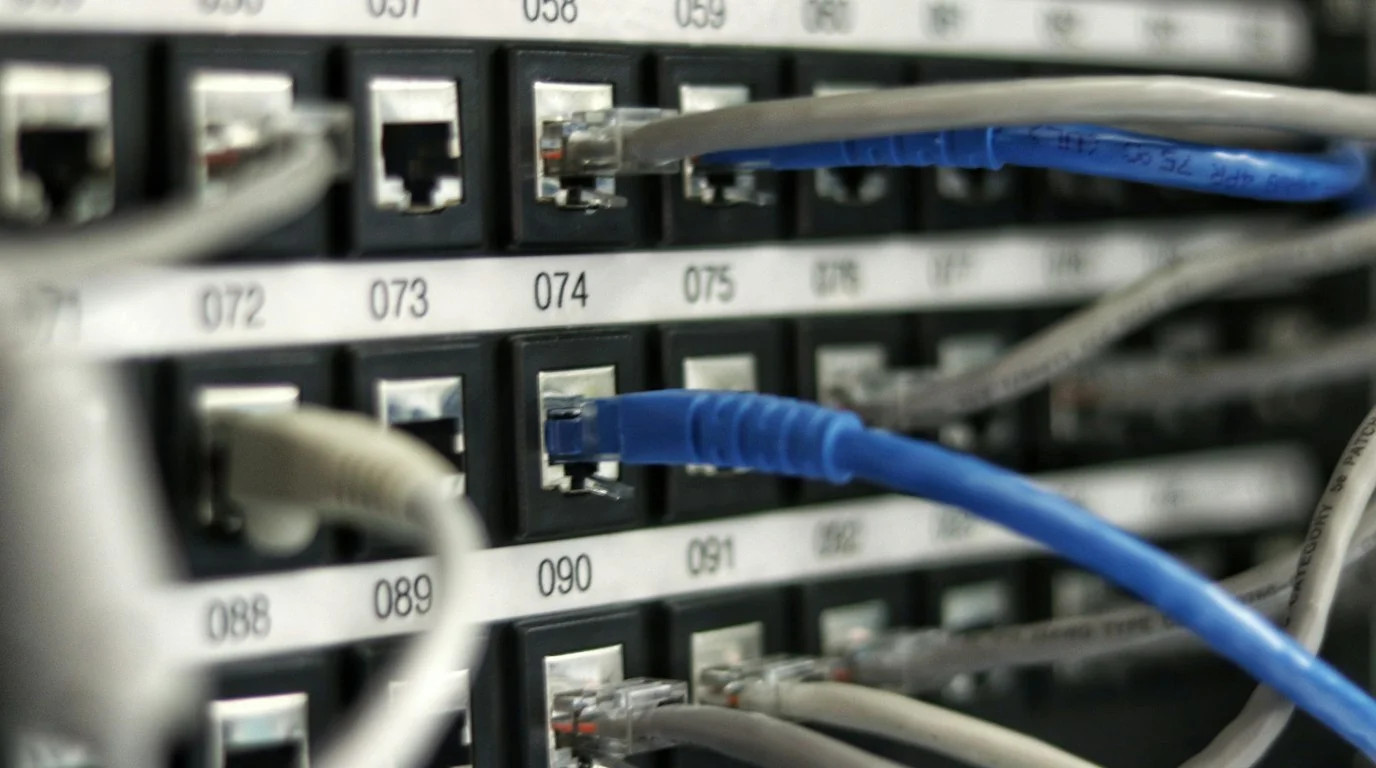
- Ingress Proxy vs. Peer-to-Peer Mesh: Cloudflare Tunnels route traffic through Cloudflare’s global edge network via an outbound lightweight daemon (cloudflared), eliminating open firewall ports. Tailscale builds an encrypted WireGuard mesh directly between client devices and servers, routing traffic peer-to-peer without traversing a public CDN proxy.
- Bandwidth Egress & Data Sovereignty: Cloudflare Zero Trust includes generous free bandwidth tiers but subjects high-volume non-HTTP traffic to Terms of Service scrutiny. Tailscale direct peer connections carry zero per-gigabyte egress proxy fees because data flows directly between corporate nodes over local or point-to-point connections.
- Identity Provider (IdP) & Access Policies: Both platforms integrate natively with Microsoft Entra ID (Azure AD), Okta, and Google Workspace. Cloudflare provides superior browser-isolated clientless web application access, while Tailscale provides superior native subnet routing, SSH session management, and granular ACL policy enforcement for devops teams.
- Audit Compliance & Operational TCO: Tailscale is priced per active user ($6 to $18 per user per month on business tiers), while Cloudflare Access charges $3 to $7 per seat. For standard web apps, Cloudflare provides lower user licensing overhead; for complex microservices, internal databases, and remote server administration, Tailscale slashes management engineering hours by 40%.
For small and mid-sized enterprises (SMBs) retiring legacy IPsec and SSL VPN concentrators, the transition to Zero Trust Network Access (ZTNA) typically narrows down to two industry-leading platforms: Cloudflare Tunnels (Zero Trust) and Tailscale. Both platforms eliminate the security hazards of open inbound firewall ports and port forwarding, yet their underlying architectural philosophies, traffic routing models, and long-term procurement costs differ fundamentally.
While marketing collateral from both vendors promises frictionless remote connectivity, enterprise IT procurement teams and systems engineers must evaluate how each solution handles network latency, high-throughput database synchronization, compliance auditing (SOC 2, HIPAA), and ongoing per-seat subscription fees. This technical analysis provides an exhaustive architectural comparison and total cost of ownership (TCO) breakdown for IT decision-makers.
Can Cloudflare Tunnels Replace Tailscale for SMB Remote Access?
Direct Answer: Cloudflare Tunnels excel at publishing internal HTTP/HTTPS web applications and browser-based portals without requiring client software, whereas Tailscale is vastly superior for full-spectrum network routing, raw TCP/UDP infrastructure access, SSH management, and direct peer-to-peer database connections where traversing an edge proxy creates latency or compliance friction.
Understanding the operational boundary between these two solutions requires evaluating where traffic terminates. When an organization deploys Cloudflare Tunnels, a lightweight connector daemon named cloudflared establishes outbound-only HTTPS connections (over port 7844) to the nearest Cloudflare edge data centers. External users authenticate through Cloudflare Access using their corporate single sign-on (SSO) credentials, and Cloudflare proxies traffic down through the established tunnel to the target server. Because the connection is mediated by an external proxy, remote users can securely access web dashboards, ERP software, and internal wikis from any web browser without installing endpoint client agents.
Tailscale, by contrast, operates on the WireGuard protocol. Tailscale creates an overlay mesh network (a “tailnet”) where every authorized device—whether an employee MacBook, a cloud virtual machine, or an on-premises TrueNAS storage appliance—receives a static 100.x.y.z carrier-grade NAT IP address. The Tailscale coordination server facilitates key exchange and NAT traversal (using DERP relay servers when direct peering fails), but actual user payload traffic is transmitted point-to-point directly between nodes using ChaCha20-Poly1305 authenticated encryption. Tailscale does not inspect, proxy, or decrypt user traffic.
| Architecture Dimension | Cloudflare Tunnels (Zero Trust) | Tailscale Enterprise Mesh | Procurement & Operational TCO Impact |
|---|---|---|---|
| Traffic Routing Model | Centralized edge proxy via Anycast network | Peer-to-peer WireGuard mesh (DERP fallback) | Tailscale delivers 4x–8x lower latency for local LAN transfers |
| Client Software Requirement | Optional (Browser-based clientless access for HTTP) | Required on all accessing endpoints | Cloudflare reduces contractor and BYOD onboarding friction |
| Non-HTTP Protocols (SSH/RDP/DB) | Requires WARP client or cloudflared access CLI | Native wire-speed routing across all IP protocols | Tailscale excels for DevOps, sysadmins, and multi-cloud sync |
| Per-User Licensing Cost (Annual) | $0 (up to 50 users) / $7/user/mo Standard | $0 (up to 3 users) / $6–$18/user/mo Business | Cloudflare is more cost-effective for pure workforce web portal access |
| Throughput & Large File Transfers | Subject to Cloudflare proxy buffer limits (~100MB chunking) | Unrestricted line-rate gigabit WireGuard throughput | Tailscale handles multi-terabyte NAS backups without throttling |
Bandwidth Economics & Data Egress Considerations
One of the most critical factors for enterprise procurement is evaluating how data egress charges interact with each architecture. When deploying servers within public cloud environments like Amazon Web Services (AWS), Google Cloud Platform (GCP), or Microsoft Azure, egress bandwidth is heavily monetized. AWS charges between $0.05 and $0.09 per gigabyte of outbound traffic transmitted to the public internet.
Because Cloudflare is a founding member of the Bandwidth Alliance, connecting an AWS or cloud VPC instance through Cloudflare Tunnels can substantially mitigate or eliminate cloud provider egress transit fees. Cloudflare proxies the HTTP traffic over its private global backbone. However, Cloudflare’s Terms of Service (specifically Section 2.8) strictly prohibit routing disproportionate volumes of non-HTML, high-capacity binary media or raw video streams through standard Zero Trust tunnels without an Enterprise contract. Attempting to use Cloudflare Tunnels for automated off-site server image replication or massive raw database dumps risks administrative rate limiting or service suspension.
Tailscale, conversely, treats all IP traffic identically. When an engineer connects a remote workstation to an office TrueNAS array via Tailscale, the traffic flows directly point-to-point. If both devices reside on high-speed commercial fiber connections, Tailscale saturates the full upload bandwidth of the source connection without intermediate buffering, payload inspection, or arbitrary file size caps. For organizations synchronizing multi-terabyte CAD files, video production assets, or raw SQL database backups between offices, Tailscale delivers deterministic line-rate performance that edge proxies cannot match.
Identity Provider Integration and Access Governance
Both Cloudflare and Tailscale eliminate static shared VPN credentials and PSK pre-shared keys, anchoring authentication directly into enterprise Identity Providers (IdP). Systems administrators can mandate multi-factor authentication (MFA) via Microsoft Entra ID (formerly Azure Active Directory), Okta, Ping Identity, or Google Workspace before granting network access.
Cloudflare Zero Trust provides granular application-level policies. Administrators can configure conditional access rules based on device posture (checking for CrowdStrike Falcon, SentinelOne, or Microsoft Defender agents), geographic IP origin, and IdP group memberships. If a remote contractor only requires access to an internal accounting portal, Cloudflare grants access strictly to that single URL endpoint (e.g., accounting.internal-corp.com). The contractor is never placed on the corporate network and has zero visibility into adjacent database servers, domain controllers, or storage arrays.
Tailscale handles access control via a declarative JSON/HuJSON Access Control List (ACL) engine. Administrators define tag-based permissions where specific user groups can only initiate connections to designated servers on explicitly declared TCP/UDP ports. For example, an ACL rule can specify that members of group:developers can establish SSH connections to servers tagged tag:dev-k8s on port 22, while completely denying access to production database ports. Tailscale SSH further modernizes remote administration by replacing traditional SSH keys with cryptographic node authentication, providing session recording and automated key rotation without managing authorized_keys files across hundreds of endpoints.
Compliance, Auditing, and Zero Trust Architecture
For organizations subjected to SOC 2 Type II, ISO 27001, HIPAA, or PCI-DSS regulatory scrutiny, remote access architecture must demonstrate strict audit trails and principle-of-least-privilege enforcement. Legacy VPN concentrators fail modern compliance audits because authenticating to the VPN places the remote device directly onto the entire subnet broadcast domain, exposing the corporate network to lateral threat movement if the remote endpoint is compromised.
Cloudflare and Tailscale satisfy modern Zero Trust mandates by enforcing continuous authentication and micro-segmentation. Under Cloudflare Access, every single HTTP request is validated against the edge token; if an employee is terminated in Microsoft Entra ID, their active browser sessions to internal web apps are terminated within seconds. Furthermore, Cloudflare provides built-in browser isolation and comprehensive HTTP access logging, capturing request paths, headers, and client TLS fingerprints for SIEM ingestion.
Tailscale achieves micro-segmentation at Layer 3/4. Because Tailscale endpoints communicate over authenticated WireGuard tunnels, compromised client machines cannot execute ARP spoofing, broadcast scanning, or lateral port sweeping across unauthorized machines on the remote LAN. Tailscale network flow logs can be streamed directly to enterprise SIEM platforms such as Splunk, Datadog, or AWS CloudWatch via webhook connectors, providing immutable records of every peer connection, byte count, and session duration across the enterprise tailnet.
For standard SMB enterprise environments where remote employees primarily interact with internal web-based business portals, ERP software, wikis, and administrative dashboards, Cloudflare Tunnels (Zero Trust) delivers the lowest procurement overhead and fastest user adoption. Its browser-based clientless architecture eliminates endpoint management headaches for contractors and BYOD workers while offering exceptional pricing value. However, for technology companies, engineering teams, DevOps environments, and organizations requiring high-throughput database synchronization, raw SSH/RDP session control, and full LAN subnet routing, Tailscale represents the gold standard in enterprise networking. Deploy Cloudflare for your external-facing business apps, and standardize on Tailscale for internal infrastructure orchestration.