
In enterprise IT departments and corporate procurement offices across North America, there is an outdated server specification habit that continues to burn millions of dollars in unneeded capital: The Default Dual-Socket Order. For nearly twenty years, dating back to the multi-core transitions of the mid-2000s, IT directors reflexively specified dual-socket (2S) 2U servers—such as the Dell PowerEdge R700 series or HPE ProLiant DL380 series—for every standard virtualization cluster, database host, and enterprise application tier. The underlying assumption was simple: if one processor is good, two processors must be necessary to guarantee performance headroom and avoid I/O bottlenecks.
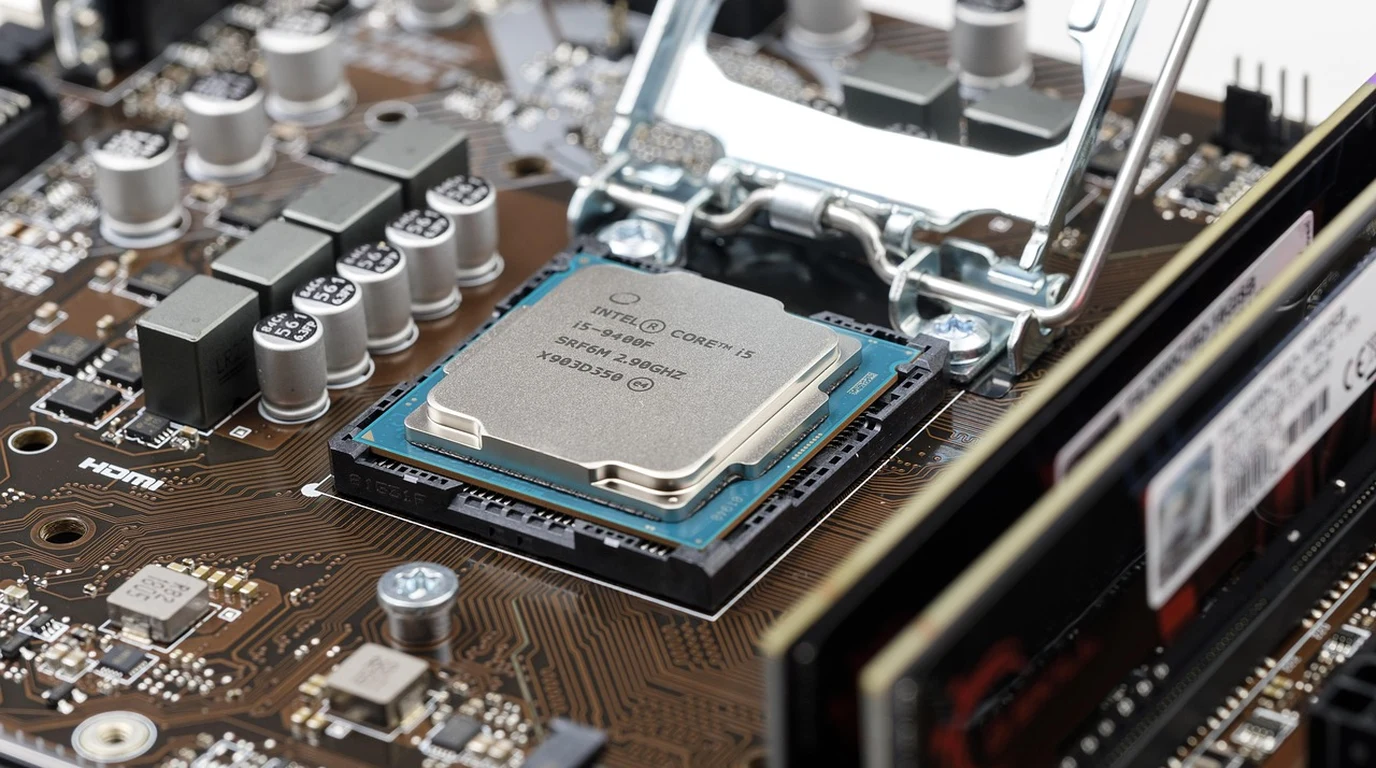
Today, that multi-decade habit is an expensive engineering mistake. The launch of modern high-density server processors—most notably the AMD EPYC 9004 Series (Genoa, Bergamo, and Turin architectures)—has fundamentally shattered the traditional economic justification for dual-socket servers. With up to 96 Zen 4 cores (192 threads) or 128 Zen 4c cloud-native cores on a single physical socket, accompanied by 12 independent channels of high-speed DDR5 memory and 128 direct PCIe Gen5 lanes, a single modern CPU delivers more computational throughput than an entire four-server dual-socket rack from just five years ago.
More critically, continuing to buy dual-socket servers in 2026 exposes your organization to brutal enterprise software licensing multipliers. With software vendors like VMware by Broadcom, Microsoft Windows Server, Oracle, and Red Hat restructuring commercial pricing around per-socket minimums and per-core thresholds, dual-socket systems carry staggering operational penalties. To optimize your datacenter capital, you must evaluate the empirical TCO deltas between modern single-socket and dual-socket infrastructure.
When Should You Choose a Single Socket Server Over Dual Socket?
To understand why the single-socket architecture has captured the enterprise datacenter, one must examine the physical memory and I/O architecture of modern server platforms. In legacy architectures, a single processor could only access 4 to 6 memory channels and 40 to 48 PCIe lanes. If an enterprise needed to address 1.5 Terabytes of RAM for virtual machines or needed 8 high-speed PCIe expansion slots for 100GbE NICs and NVMe storage, they were physically forced to add a second CPU socket solely to gain access to that second CPU’s memory controllers and PCIe lanes.
However, adding a second CPU introduces what hardware engineers term the NUMA (Non-Uniform Memory Access) Penalty. In a dual-socket system, memory is physically split across two independent memory controllers. When a virtual machine running on CPU Socket 0 needs to read data stored in RAM connected to CPU Socket 1, the data must travel across an inter-socket interconnect bus (such as AMD Infinity Fabric or Intel UPI). This cross-socket memory hop incurs an instantaneous 25% to 40% memory latency penalty, creating unpredictable jitter in high-frequency trading applications, in-memory databases, and dense hypervisor clusters.
In contrast, a modern single-socket AMD EPYC server (such as the PowerEdge R7615 or ProLiant DL325 Gen11) provides 12 direct DDR5 memory channels on a single socket, delivering over 460 Gigabytes per second of raw, uniform memory bandwidth without a single cross-socket hop. Furthermore, the single processor exposes 128 high-speed PCIe Gen5 lanes directly to the motherboard—matching or exceeding the usable PCIe lane count of most legacy dual-socket Intel configurations. You gain complete I/O and memory expansion without paying the NUMA latency tax.
- Licensing Slaughter: Broadcom’s VMware Cloud Foundation licensing imposes mandatory 16-core minimums per socket; dual-socket servers double your base license exposure on every chassis.
- Uniform Memory Access: Single-socket EPYC eliminates inter-socket NUMA hops, delivering consistent sub-100ns memory latency across 1.5TB to 3.0TB RAM pools.
- Power & Cooling Dividends: A single 64-core processor consumes 40% less idle power than two 32-core processors, compounding into tens of thousands in datacenter PUE energy savings.
- When Dual Socket Still Wins: Dual-socket configurations remain necessary only for extreme workloads requiring >128 cores per chassis or >3.0TB of physical RAM.
Forensic Financial Matrix: 5-Year TCO Comparison (Cluster of 4 Nodes)
The table below models a 4-node enterprise virtualization cluster supporting 256 virtual machines over a 5-year operating lifecycle, comparing a legacy Dual-Socket Intel Xeon deployment against a modern Single-Socket AMD EPYC 9004 deployment.
| TCO Dimension | Legacy Dual-Socket (2x 32-Core Intel) | Modern Single-Socket (1x 64-Core EPYC) | Financial & Architectural Impact |
|---|---|---|---|
| Total Compute Core Count | 256 Cores (4 nodes x 2 CPUs x 32C) | 256 Cores (4 nodes x 1 CPU x 64C) | Identical core density across both configurations. |
| Hardware Server CapEx (4 Nodes) | $78,000 USD (8 CPUs, 8 Heat sinks) | $54,000 USD (4 CPUs, 4 Heat sinks) | Single-socket hardware costs $24,000 less upfront (30.7% CapEx savings). |
| VMware vSphere Enterprise Licensing | $51,200 USD / 5-Yr (8 Sockets) | $25,600 USD / 5-Yr (4 Sockets) | Broadcom socket-based licensing rules slash hypervisor software costs in half. |
| 5-Year Datacenter Power & Cooling | $32,400 USD (2,400W continuous) | $19,800 USD (1,450W continuous) | Single-socket EPYC consumes 39% less continuous power, saving $12,600 in electricity. |
| 5-Year Total Cost of Ownership | $161,600 USD | $99,400 USD | Single-socket EPYC delivers $62,200 USD net savings (38.5% total TCO reduction). |
The Software Licensing Guillotine: Broadcom, Microsoft, and Oracle
The financial elephant in the server room is not the cost of copper, silicon, or rack chassis—it is the catastrophic cost of enterprise software licensing.
Following Broadcom’s acquisition of VMware, enterprise virtualization licensing was overhauled into a brutal subscription model that enforces a minimum of 16 core licenses per physical CPU socket. If you deploy a dual-socket server, even if you configure two low-core CPUs (e.g., two 8-core CPUs), Broadcom bills you for a minimum of 32 cores across the two sockets. By consolidating that same 32-core or 64-core workload onto a single physical EPYC socket, your organization slashes its base socket overhead in half.
The disparity is even more extreme in database licensing. Oracle Database Enterprise Edition licenses processors based on a “Core Processor Licensing Factor.” In a dual-socket system, you are forced to license every core present on both processors, regardless of whether your database threads actually utilize them. Deploying a single-socket EPYC server with high per-core frequency (such as the AMD EPYC 9174F or 9374F) provides extraordinary per-thread performance while cutting your Oracle license liability by hundreds of thousands of dollars.
Break the dual-socket procurement reflex. The single-socket AMD EPYC 9004 platform has rendered dual-socket server configurations an unnecessary luxury for the vast majority of enterprise workloads. A single 64-core or 96-core EPYC processor provides all the memory bandwidth, PCIe Gen5 connectivity, and raw computational muscle your hypervisors will ever need—while eliminating NUMA cross-socket latency, slashing datacenter power draw, and cutting enterprise software licensing bills by nearly 40%. Build your next cluster on single-socket EPYC and keep your capital where it belongs.
The 4:00 PM Actionable Server Sizing Checklist
Before approving your next enterprise server configuration, execute this four-step architectural sizing audit:
- Audit Cluster Memory Density: Check your hypervisor cluster’s total RAM consumption. Modern single-socket AMD EPYC servers support up to 1.5TB to 3.0TB of DDR5 memory across 12 channels. If your node requires less than 2.0TB of RAM, eliminate dual-socket proposals immediately.
- Calculate Per-Socket Software Licensing Exposure: Request a written software licensing audit from your procurement team covering VMware Cloud Foundation, Microsoft Windows Server Datacenter, and database workloads. Compare the 5-year licensing costs of 8 physical sockets vs 4 physical sockets.
- Verify PCIe Card Slot Count: Inspect your expansion card requirements (e.g., dual 25GbE NICs, dual 32G Fibre Channel HBAs, hardware boot controller). A single-socket EPYC server provides 128 direct PCIe Gen5 lanes—ample bandwidth to drive 4 to 6 full-height PCIe slots without bifurcation compromises.
- Demand Single-Socket OEM Bids: Ask your Dell (R6615 / R7615) or HPE (DL325 / DL345 Gen11) representative for an alternate single-socket EPYC quote matching the exact core and RAM count of your dual-socket bid. Watch how the hardware quote drops by 25% and your power budget exhales.
High-throughput 25GbE switching directly complements dense multi-socket server nodes. Review our architectural guide on 10GbE vs 25GbE Enterprise Switches: SFP28 Sizing Guide.