
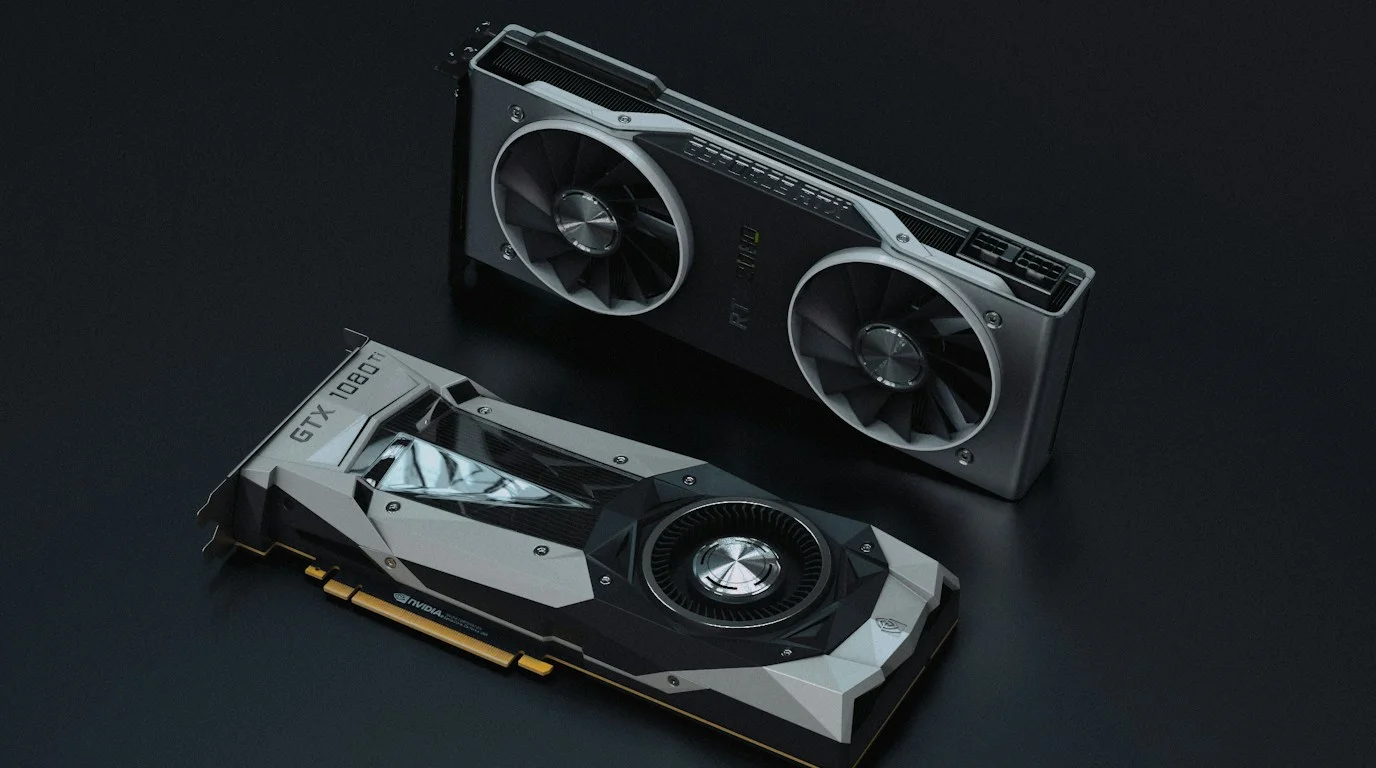
Engineering teams and corporate data science departments face an intense architectural dilemma when budgeting for on-premises artificial intelligence (AI) inference and fine-tuning workstations: should procurement allocate $6,800 to $7,500 for a single professional NVIDIA RTX 6000 Ada Generation (48GB VRAM) workstation card, or allocate approximately $3,800 to build a dual-GPU system powered by two consumer GeForce RTX 4090 cards (2x 24GB VRAM)? On paper, both configurations provide 48GB of total video memory, but at nearly half the hardware cost for the dual-consumer configuration.
However, treating total VRAM capacity as a simple mathematical sum is a dangerous trap in production AI architecture. In local Large Language Model (LLM) fine-tuning (LoRA/QLoRA), deep learning model inference (such as LLaMA 3 70B quantized), and 3D computer vision workflows, how that memory is structured, addressed, and cooled dictates whether your engineering workstation delivers stable training runs or crashes with Out-Of-Memory (OOM) errors and tripped circuit breakers. Understanding the enterprise realities of professional Ada silicon versus consumer hardware is vital for IT procurement.
- Unified Memory vs. Model Parallelism: The RTX 6000 Ada provides a single, contiguous 48GB VRAM address space with Error-Correcting Code (ECC) protection on a single PCIe Gen4 x16 bus. Dual RTX 4090s provide two physically isolated 24GB memory pools because NVIDIA permanently eradicated physical NVLink bridges on the Ada Lovelace consumer generation. Running models larger than 24GB across dual 4090s requires pipeline parallelism (split layers) across the PCIe bus, introducing severe inter-card communication latency.
- Thermal Form Factor & Blower Design: The RTX 6000 Ada features a compact dual-slot blower-style cooling cooler pulling a maximum 300 watts, engineered specifically for high-density multi-GPU chassis airflow. Dual RTX 4090s are massive 3.5-slot to 4-slot axial-fan cards pulling up to 450 watts each (900W combined GPU load), requiring extreme chassis spacing, specialized 1600W+ power supplies, and massive case exhaust ventilation to prevent thermal throttling.
- Datacenter & Commercial EULA Compliance: NVIDIA’s consumer GeForce software driver EULA strictly prohibits deploying GeForce hardware inside commercial enterprise datacenter server racks (with narrow exceptions for blockchain processing). The RTX 6000 Ada is fully enterprise-certified, backed by NVIDIA Enterprise Support, long-term stable vGPU drivers, and 3-year commercial replacement warranties.
- Silent Data Corruption Protection (ECC): The RTX 6000 Ada features enterprise GDDR6 memory with active ECC enabled. When training or fine-tuning corporate models for days or weeks, ECC prevents silent bit-flip memory errors that corrupt weights and invalidate days of computational progress. The RTX 4090 lacks hardware ECC support on its consumer GDDR6X memory.
What Is the Structural Difference Between Single RTX 6000 Ada and Dual 4090s?
The death of NVLink on the consumer RTX 4090 fundamentally transformed multi-GPU economics. On previous generation hardware (such as dual RTX 3090s), a physical NVLink bridge connected two cards at 112 GB/s bidirectional bandwidth, allowing software frameworks to pool VRAM into a virtually unified memory pool. On the RTX 40-series, NVIDIA intentionally eliminated the NVLink physical gold fingers from all consumer GeForce silicon, reserving unified multi-card memory exclusively for professional data center GPUs (H100/H200/B200 NVLink) and workstation Ada tiers.
Without NVLink, two RTX 4090s must communicate across the motherboard PCIe slots. When running an enterprise 70-billion-parameter LLM (which requires approximately 38GB of VRAM at 4-bit precision or 76GB at 8-bit precision), a single RTX 6000 Ada loads the entire model onto its single 48GB memory bus with zero PCIe communication overhead. On dual RTX 4090s, the model must be partitioned across both cards using software frameworks like DeepSpeed or Hugging Face Accelerate. Every forward and backward training pass must transfer millions of intermediate activation tensors across the motherboard PCIe bus, creating a severe bandwidth bottleneck that throttles total training speed.
| Architecture & Procurement Dimension | Single NVIDIA RTX 6000 Ada | Dual NVIDIA GeForce RTX 4090 | Enterprise TCO & Operational Impact |
|---|---|---|---|
| Hardware Acquisition CapEx | $6,800 – $7,200 (Single GPU) | $3,600 – $4,200 (Two GPUs) | Consumer dual-GPU build saves ~$3,000 in upfront hardware spend |
| VRAM Memory Topology | 48GB Unified Contiguous GDDR6 | 2x 24GB Split GDDR6X (No NVLink) | Single 48GB pool runs large models without complex model parallelism |
| Memory Error-Correcting Code (ECC) | Enabled by default (Hardware ECC) | None (Consumer Non-ECC) | ECC prevents silent bit-flip weight corruption during multi-day training |
| Chassis Physical Space & Form Factor | Dual-slot blower cooler (Standard PCIe) | Two massive 3.5-slot axial coolers | Dual 4090s require specialized E-ATX workstation cases or water cooling |
| Peak Power Consumption (TDP) | 300 Watts Max | 900 Watts Combined (2x 450W) | Dual 4090s require 1600W+ PSU and produce massive heat output |
| Enterprise Support & Drivers | NVIDIA Enterprise Support & Studio / vGPU | Standard Consumer GeForce Game Ready | Professional drivers guarantee ISV certification (SolidWorks, Maya, PyTorch) |
| Enterprise EULA Compliance | 100% Fully Enterprise & Datacenter Certified | GeForce EULA restricts datacenter server use | Corporate legal teams strictly forbid GeForce in server racks |
The Real-World Thermal Nightmare of Dual 4090s
In independent benchmark videos, tech enthusiasts frequently showcase dual RTX 4090 workstations on open-air test benches. In open air, dual 4090s perform adequately. However, inside a closed corporate workstation chassis or 4U rackmount server enclosure, physics catches up quickly.
Because consumer RTX 4090s utilize axial “flow-through” coolers, they dump hundreds of watts of hot exhaust air directly into the interior of the computer case rather than exhausting it out the rear PCIe bracket. When you sandwich two 3.5-slot cards onto a motherboard, the top GPU has its intake fans blocked by the backplate of the bottom GPU, receiving only 5mm of clearance. Under sustained PyTorch training loops, the top card frequently exceeds 88°C on core silicon and 105°C on GDDR6X memory junction temperature, triggering aggressive thermal throttling that slashes compute performance by up to 35%.
The RTX 6000 Ada, by contrast, is engineered with a rear-exhaust centrifugal blower fan. It draws cool air from inside the chassis and forces 100% of the heated exhaust air directly out the rear PCIe bracket of the workstation. At a modest 300W maximum board power, you can install two, three, or four RTX 6000 Ada cards directly side-by-side in adjacent dual-slot PCIe slots with zero thermal interference.
Actionable Enterprise AI Workstation Sizing Checklist
- Evaluate Parameter Size Requirements: If your team’s primary workload is fine-tuning models between 7B and 13B parameters, a single RTX 4090 (24GB) or dual 4090s can provide sufficient budget capacity for early R&D.
- Mandate RTX 6000 Ada for 70B Quantized Models: If your data scientists need to run LLaMA 3 70B, Mixtral 8x22B, or large vision transformer models locally without network latency, standardizing on the RTX 6000 Ada’s single 48GB unified memory bus is strictly necessary to prevent out-of-memory crashes.
- Power Circuit Sizing: Dual RTX 4090 systems frequently pull over 1,300 watts from the wall under full system compute load (GPUs + Threadripper CPU + cooling pumps). Verify that office cubicle circuits can support sustained 15-amp loads without tripping building circuit breakers.
- Review Corporate Software Warranties: Enterprise software suites (such as Siemens NX, Autodesk, and certified PyTorch/TensorFlow enterprise stacks) provide technical support SLA guarantees only when systems utilize certified NVIDIA Workstation (RTX) GPUs, not consumer GeForce gaming cards.
For corporate AI engineering teams and enterprise workstation procurement, the NVIDIA RTX 6000 Ada Generation is worth every penny of its $3,000 price premium over dual consumer RTX 4090s. The contiguous 48GB unified memory pool, hardware ECC memory protection, compact 300W blower thermal form factor, and full enterprise driver support eliminate the agonizing pipeline parallelism bottlenecks, case thermal choking, and silent memory corruption risks inherent in dual-consumer builds. Allocate your budget for the professional Ada platform and let your data scientists build models instead of debugging hardware crashes.