
When PC builders invested in top-tier ATX 3.0 power supplies in late 2022 and 2023, they believed they were buying future-proof power delivery engineered to handle 600W PCIe 5.0 graphics cards for a decade. Within months, viral reports of melted 12VHPWR power plugs, charred GPU header sockets, and catastrophic contact resistance failures spread across hardware forums worldwide.
Intel and the PCI-SIG responded with the rapid publication of the ATX 3.1 power supply design guide and the PCIe CEM 5.1 specification. Understanding the mechanical, electrical, and thermal differences between ATX 3.0 and ATX 3.1 is essential for anyone running high-draw workstation or gaming GPUs in 2026.
What Is the Difference Between an ATX 3.0 and ATX 3.1 Power Supply Cable?
The root engineering flaw of the original ATX 3.0 12VHPWR connector was an absence of mechanical margin. In the original design, the power conductors and the four delicate sideband sense pins (S1 through S4) were roughly equal in engagement depth. If a builder pushed the connector in until it seemed seated—leaving a microscopic 2.0mm gap due to tight case bends or stiff sleeving—the sense pins still made electrical contact, falsely signaling to the GPU that it was safe to pull 450W to 600W.
Under heavy current, that 2.0mm gap meant the power terminals made contact only at the very tips of the spring leaves, driving contact resistance from 5 milliohms up to 50+ milliohms. Simple Joule heating physics (P = I²R) dictated the outcome: at 50 amps across 12V leads, localized heat soared past 150°C, melting the PBT plastic housing and welding the connector to the graphics card.
The ATX 3.1 12V-2×6 redesign solves this through two deliberate geometric inversions:
- Recessed Sideband Sense Pins: The four signal pins are recessed 1.7mm deeper into the housing. If the connector is backed out even slightly, the sense pins lose contact first. The GPU detects an open circuit on Sense0/Sense1 and either refuses to boot or limits power consumption to 150W (fallback safe state).
- Lengthened Power Terminals: The twelve conductive power pins are lengthened by 0.25mm, guaranteeing a minimum contact overlap of 3.0mm even under mechanical stress.
- Relaxed Hold-Up Time Requirement: ATX 3.1 lowered the mandatory AC power loss hold-up time requirement from 17ms down to 12ms, allowing PSU manufacturers to optimize internal bulk capacitor sizing and reduce standby thermal strain.
| Connector Standard | Specification Version | Power Pin Length | Sense Pin Depth | Safety Fail-Safe Behavior | Melting Risk Level |
|---|---|---|---|---|---|
| 12VHPWR (ATX 3.0 Legacy) | PCIe Base 5.0 (2022) | 4.20 mm | Flush / 0.0 mm recess | None (Pulls 600W while partially unseated) | High Risk (Melt hazard) |
| 12V-2×6 (ATX 3.1 Modern) | PCIe Base 5.1 (2024–2026) | 4.45 mm (+0.25mm) | 1.70 mm Recessed | Instant shutoff / Safe 150W throttle | Near Zero (Physical interlock) |
| Dual / Triple 8-Pin to 12VHPWR Adapter | Legacy squid adapter bundle | Varies by OEM | Flush (Rigid terminal crimp) | None (Bending fatigue risk) | Very High (Cable clutter & strain) |
| Direct Native 12V-2×6 Modular Cable | ATX 3.1 Type-4 / Type-5 Modular | 4.45 mm | 1.70 mm Recessed | Automated PSU protection trip | Near Zero (Certified 16 AWG) |
Do You Need a New Power Supply to Use the 12V-2×6 Connector?
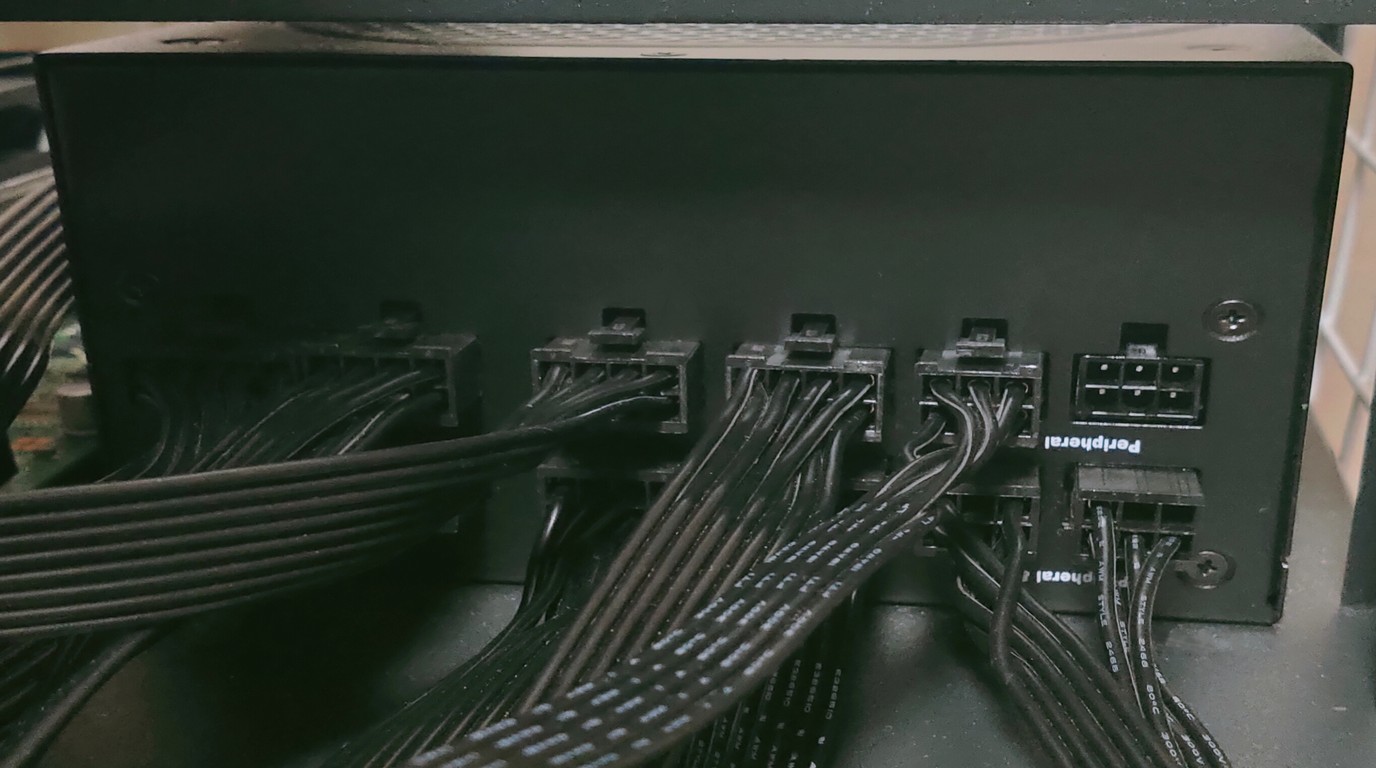
The electrical pinouts of 12VHPWR and 12V-2×6 are 100% pin-compatible. Major PSU manufacturers (Corsair, Seasonic, be quiet!, SilverStone) have rolled out official 12V-2×6 modular replacement cables that plug directly into existing ATX 3.0 modular backplanes.
When upgrading your graphics card or cable harness, follow these three essential safety rules:
- Identify the Connector Stamping: Genuine 12V-2×6 connectors feature a subtle embossed
H++stamp on the plastic connector housing (whereas legacy 12VHPWR connectors are stamped withH+). Always verify theH++marking. - Respect the 35mm Bend Clearance Rule: Never bend the 12V-2×6 cable within 35mm (1.4 inches) of the connector housing. Bending too close to the pins places uneven lateral tension on the outer conductors, causing asymmetric pin contact resistance as documented in our forensic analysis of 12V-2×6 Power Connector Temperature Monitoring & GPU Safety.
- Listen for the Mechanical Click: Even with recessed sense pins, ensure the top locking latch fully clips over the GPU header tab. A fully seated connector should have zero visible air gap between the plug and the socket.
People Also Ask
Can I plug an ATX 3.1 12V-2×6 cable into an RTX 4090?
Yes. The 12V-2×6 cable is completely backwards-compatible with all GeForce RTX 40-series graphics cards (RTX 4090, 4080 Super, 4070 Ti). In fact, NVIDIA began quietly revising the GPU-side headers on late-production RTX 4090 and 4080 cards with recessed sense pins as early as late 2023.
What happens if an ATX 3.1 cable is plugged in loosely?
If an ATX 3.1 12V-2×6 cable is unseated by more than 1.5mm, the recessed sideband sense pins will not make contact. The GPU firmware detects the open circuit and immediately halts boot sequence or throttles power draw to 150W, eliminating the high-current draw that causes melting.
Is an ATX 3.0 power supply dangerous to keep using?
An ATX 3.0 power supply itself is not dangerous—high-end ATX 3.0 units feature outstanding voltage regulation, Japanese capacitors, and robust over-current protection. The only danger is using an original, unrevised 12VHPWR cable (marked H+) under extreme bending angles. Swapping that cable for an updated 12V-2×6 cable (marked H++) completely eliminates the hazard.
H++ cables. If you already own an ATX 3.0 unit, invest $25 in a certified 12V-2×6 modular replacement cable and rest easy knowing your multi-thousand-dollar GPU is physically protected from thermal destruction.