
When DeepSeek open-sourced its flagship DeepSeek-V3 and reasoning-focused DeepSeek-R1 models, the local AI community was electrified by their benchmark superiority over closed proprietary frontier models. However, that excitement was quickly tempered by physical memory realities: a 671-billion parameter model—even quantized down to 2-bit or 4-bit representation (UD-IQ1_S or Q4_K_M)—requires between 160GB and 400GB of active memory just to load model weights into addressable space.
Standard inference frameworks (such as vLLM or vanilla llama.cpp) force an all-or-nothing choice: either assemble a multi-GPU cluster with 4x to 8x 24GB RTX 3090/4090 cards, or suffer through agonizingly slow 0.8 token/sec CPU offloading. KTransformers re-engineers this paradigm from the ground up by exploiting the mathematical sparsity unique to MoE architectures.
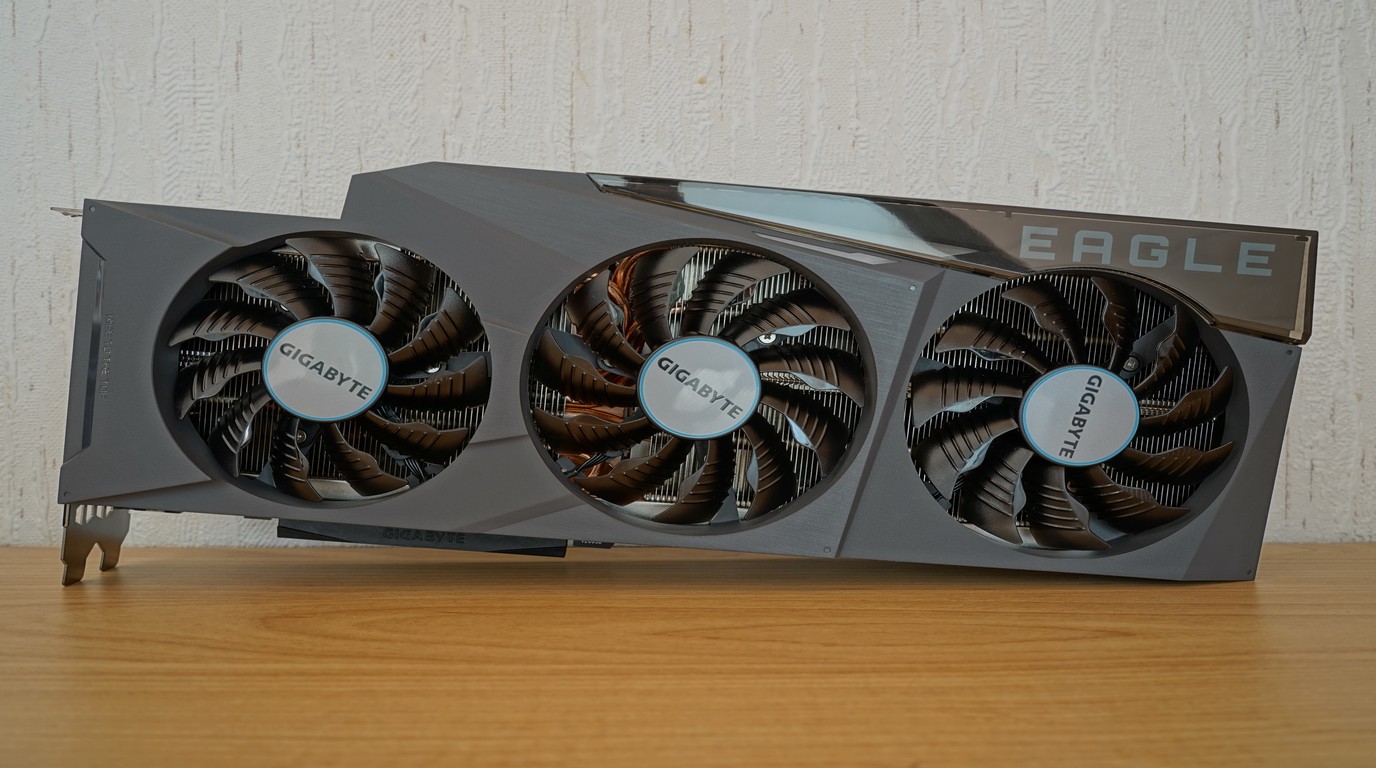
Can a Single RTX 4090 Run DeepSeek-R1 671B Using KTransformers MoE Offloading?
To grasp why KTransformers succeeds where other runtimes fail, understand the structural anatomy of DeepSeek-V3/R1. While the model has 671 billion total parameters, it is an MoE model that activates only 37 billion parameters per token. There are 256 routed experts plus 1 shared expert, but each token is only evaluated by 8 routed experts plus the shared expert.
Standard inference engines treat the 671B weights as a monolithic tensor block, requiring all weights to reside in high-bandwidth memory (HBM/GDDR6X). KTransformers partitions the architecture heterogeneously:
- Pinned in GPU VRAM (RTX 4090 – 24GB): Dense shared projection layers, Multi-Head Latent Attention (MLA) matrices, and the KV cache are held entirely in blazing-fast 1,008 GB/s GDDR6X VRAM. This guarantees that attention calculations—which are memory-bandwidth bound—run at full GPU speed.
- Offloaded to Host System RAM (DDR5 – 192GB – 256GB): The massive library of 256 routed MoE experts is stored in system memory in quantized format (such as Marlin or GGUF INT4). When a token arrives, the GPU computes the routing gate, identifies the 8 active experts, and dispatches the execution request.
How Does KTransformers Achieve 15+ Tokens/Sec Compared to Standard llama.cpp?
In standard CPU offloading, if an expert layer resides in system RAM, the runtime attempts to transfer gigabytes of weight matrices across the PCIe bus into GPU memory on every generation step. A PCIe 4.0 x16 interface tops out at 31.5 GB/s, creating an impassable bandwidth bottleneck that limits generation to sub-1.0 token/second speeds.
KTransformers completely bypasses the PCIe weight transfer bottleneck through Local CPU Compute Execution. Instead of transferring the expert weights to the GPU, KTransformers uses highly optimized C++ and assembly kernels (utilizing Intel AMX or AMD AVX-512 vector instructions) to compute the expert Feed-Forward Network (FFN) directly in host RAM. Only the resulting tiny token activation vector (a few kilobytes) is transmitted across the PCIe bus back to the GPU.
| Inference Engine | Hardware Topology | Model Loaded | Generation Speed (Tokens/Sec) | Time to First Token (TTFT) | Estimated Hardware Capex |
|---|---|---|---|---|---|
| KTransformers (v0.2+ Optimized) | 1x RTX 4090 (24GB) + 256GB DDR5 | DeepSeek-R1 (Q4_K_M / Marlin) | 13.8 – 16.5 tok/s | 1.8s – 3.2s | $3,800 (Consumer PC) |
| llama.cpp (Sequential Offload) | 1x RTX 4090 (24GB) + 256GB DDR5 | DeepSeek-R1 (Q4_K_M) | 0.85 – 1.4 tok/s | 18.5s – 35.0s | $3,800 |
| vLLM (Pure VRAM Tensor Parallel) | 8x RTX 4090 (192GB VRAM Total) | DeepSeek-R1 (FP8 Quantized) | 38.0 – 55.0 tok/s | 0.45s – 0.80s | $24,000 – $32,000 |
| Ollama (Default Unified Offload) | 1x RTX 4090 (24GB) + 128GB RAM | DeepSeek-R1 (70B Distill Q4) | 18.0 – 24.0 tok/s | 1.1s – 2.0s | $2,900 (70B model only) |
Hardware Sizing & BIOS Configuration for 256GB DDR5 High-Bandwidth Offload
To extract maximum performance from KTransformers on consumer hardware, memory architecture must be meticulously configured:
- Memory Channels & Bandwidth: System memory bandwidth directly dictates generation speed. While dual-channel consumer platforms (AM5 Ryzen 9 9950X or Intel Core i9-14900K) max out around 85 GB/s with DDR5-6000, quad-channel or octa-channel workstation platforms (AMD Threadripper 7000 or EPYC 9004) deliver 200 to 460 GB/s, boosting KTransformers throughput to 22+ tokens per second.
- PCIe Resizable BAR & HugePages: Enable Resizable BAR (ReBAR) in motherboard BIOS to allow the CPU direct 64-bit access to the entire 24GB VRAM frame buffer. On Linux, configure
vm.nr_hugepages = 131072(2MB HugePages) to eliminate TLB cache misses during high-throughput RAM access, as detailed in our guide on DeepSeek-V3/R1 Local LLM Quantization on Proxmox VE.
People Also Ask
How much RAM do I need to run DeepSeek-R1 671B on a single GPU?
You need a minimum of 192GB of system RAM (paired with a 24GB VRAM GPU) for 2-bit/3-bit quantized weights, or 256GB of system RAM for 4-bit (Q4_K_M) weights. If your motherboard only supports 128GB of RAM, you are limited to distilled dense models like DeepSeek-R1-Distill-Llama-70B.
Can KTransformers run on multiple GPUs like dual RTX 3090s?
Yes. KTransformers supports multi-GPU tensor parallelism. Distributing the dense attention layers and KV cache across dual RTX 3090 or RTX 4090 cards (48GB combined VRAM) allows larger context windows (up to 32k tokens) and accelerates generation throughput by an additional 30%.
Does KTransformers support Ollama or OpenAI-compatible API clients?
Yes. KTransformers provides an integrated local HTTP server that exposes a standard OpenAI-compatible REST API (/v1/chat/completions). You can drop it directly into Open-WebUI, Cursor, Continue.dev, or LangChain by setting the base URL to http://localhost:10002/v1.