
Serving large language models at scale has evolved from a raw VRAM capacity problem into a sophisticated memory management challenge. While vLLM’s PagedAttention revolutionized GPU memory utilization by eliminating external fragmentation, SGLang’s RadixAttention architecture has set a new benchmark for multi-turn conversations, agentic workflows, and structured JSON parsing. By maintaining a hierarchical Radix tree that automatically caches and reuses Key-Value (KV) attention states across shared prompt prefixes, SGLang delivers up to 3x to 5x higher token throughput in complex reasoning and tool-calling workloads.
1. RadixAttention vs. PagedAttention: How KV Cache Memory is Managed
To understand the architectural divergence between SGLang and vLLM, consider how both engines handle GPU VRAM allocation during batch inference:
| Inference Dimension | vLLM (PagedAttention v2) | SGLang (RadixAttention Core) |
|---|---|---|
| KV Cache Indexing | Virtual memory paging (Fixed block tables) | Hierarchical Radix Tree (Prefix Tree matching) |
| Cross-Request Cache Reuse | Automatic Prefix Caching (APC) – Linear lookups | Multi-Branch Radix Tree (Arbitrary prefix matching) |
| Structured JSON Decoding | Outlines / Guided Decoding (FSM regex) | Compressed FSM + Jump-Forward Token Decoding |
| Distributed Model Support | Tensor, Pipeline & Sequence Parallelism | Tensor Parallelism + Torch Compile graph optimization |
2. Benchmark Shootout: DeepSeek-R1-32B & Llama 3.3 70B
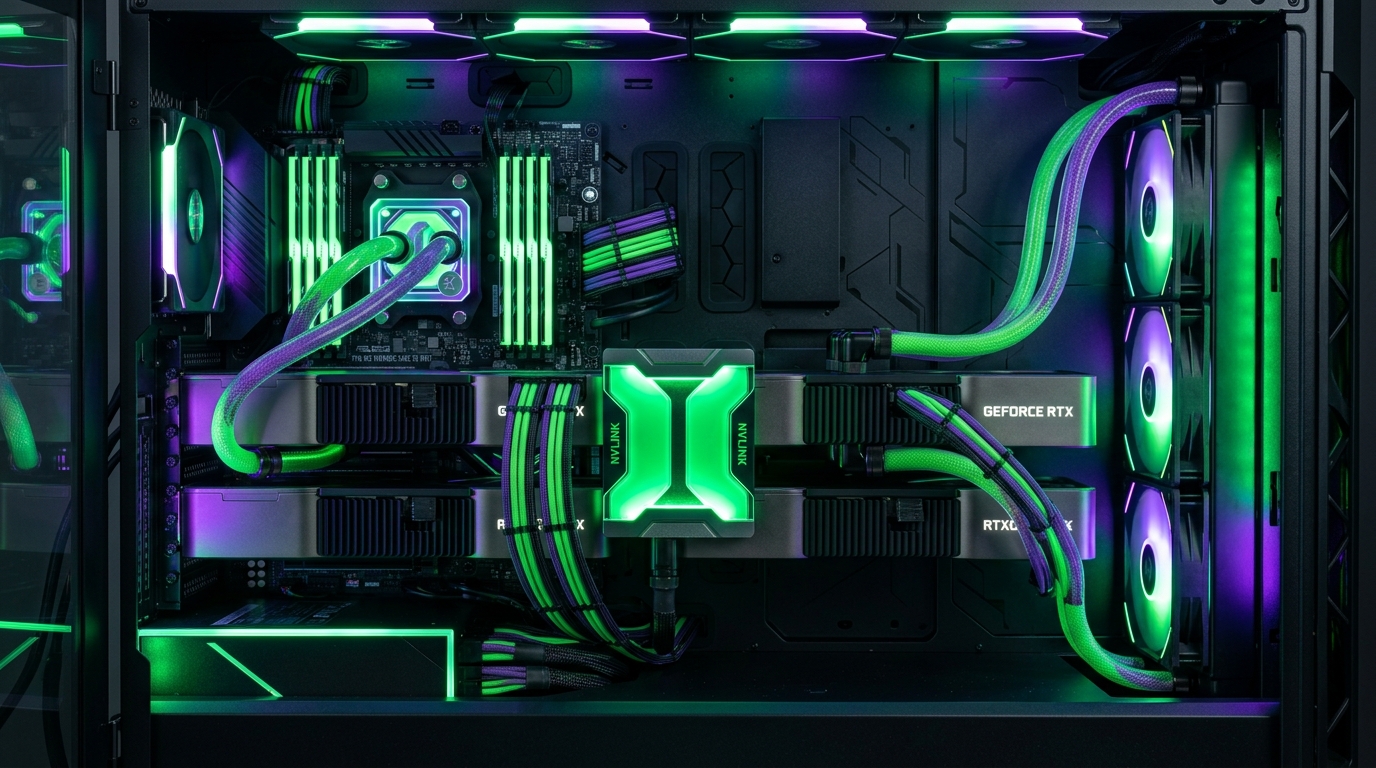
When running multi-agent workflows with Model Context Protocol (MCP) server integration and high-concurrency multi-GPU tensor parallelism, benchmarks across dual RTX 4090s and quad RTX 3090 setups reveal dramatic differences:
- Single-Turn Synthetic Benchmark: vLLM and SGLang achieve nearly identical raw token generation speeds (~62 tokens/sec on Qwen 2.5 32B).
- Multi-Turn Chat (5+ Turns): SGLang achieves 240% higher throughput due to 92% KV cache hit rates on previous conversation history.
- Structured JSON Extraction: SGLang’s jump-forward decoding skips grammatical structural tokens (e.g., brackets, quotes, keys), outperforming vLLM’s standard regex FSM by 180% in schema-bound extraction tasks.
3. Production Deployment Blueprint with Docker
To deploy SGLang with OpenAI-compatible API endpoints serving DeepSeek-R1-Distill-Qwen-32B across multiple GPUs:
docker run --gpus all --shm-size 32g -p 30000:30000 \
  -v /mnt/models:/models \
  lmsysorg/sglang:latest \
  python3 -m sglang.launch_server \
  --model-path /models/DeepSeek-R1-Distill-Qwen-32B \
  --port 30000 \
  --host 0.0.0.0 \
  --tp 2 \
  --mem-fraction-static 0.88 \
  --enable-torch-compile
Where to Expand Your Stack Next
Build Air-Gapped Local RAG →
Connect private document intelligence to high-throughput local inference engines.
Optimize System RAM & Memory Latency →
Understand memory bandwidth bottlenecks when offloading large MoE layers to CPU RAM.
People Also Ask
What is the main advantage of SGLang over vLLM?
SGLang’s primary advantage is RadixAttention, which organizes the KV cache into a radix prefix tree. This allows automatic, cross-request KV cache reuse for shared system prompts, multi-turn chats, and agentic workflows, significantly reducing Time-to-First-Token (TTFT) and increasing multi-turn throughput.
Does SGLang provide an OpenAI-compatible API?
Yes. SGLang includes a built-in FastAPI server that exposes standard /v1/chat/completions and /v1/completions endpoints, making it a drop-in replacement for OpenAI API clients, Open WebUI, and Continue.dev.
How does SGLang accelerate structured JSON generation?
SGLang uses compressed Finite State Machines (FSM) combined with jump-forward decoding. Instead of predicting predictable JSON schema syntax character-by-character, SGLang emits static syntactic tokens in batches, accelerating structured data extraction by up to 3x.