
If you are an enterprise AI engineer, machine learning platform architect, or FinOps lead tasked with building local generative AI workstations in 2026, you are facing a critical GPU procurement dilemma. With cloud API bills from OpenAI and Anthropic spiraling into tens of thousands of dollars per month, organizations are rapidly repatriating proprietary code assistance, document analysis, and fine-tuning workloads onto on-premise local workstations.
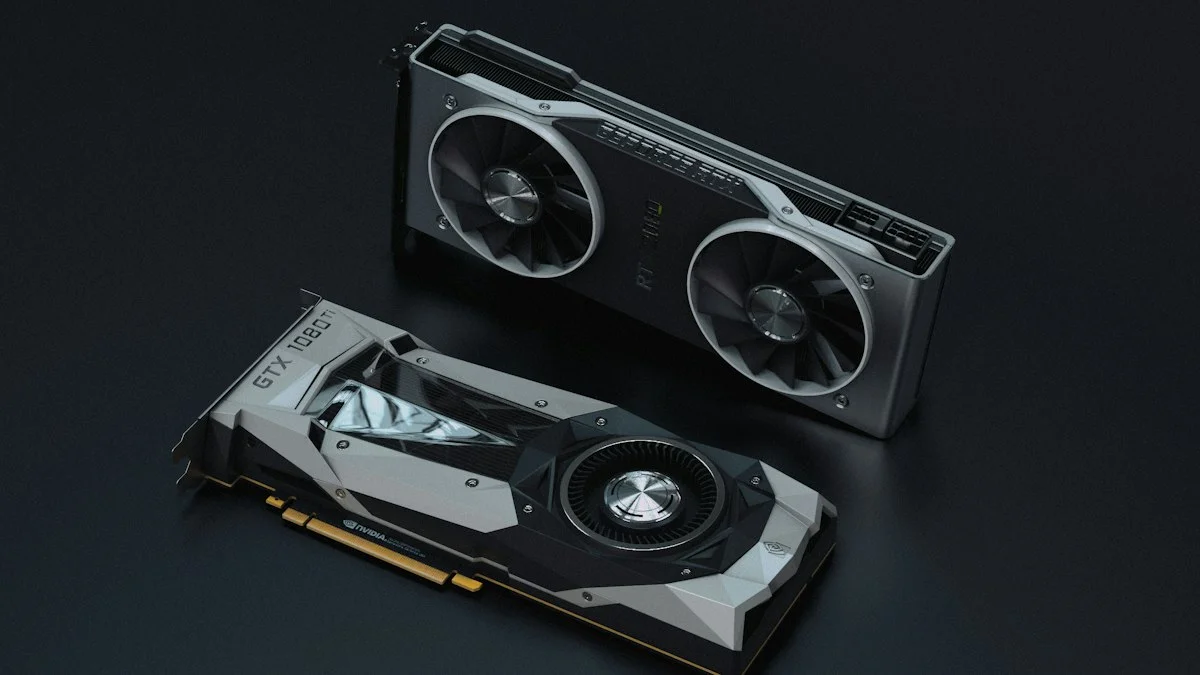
In the workstation hardware marketplace, the choice comes down to a fierce generational showdown: the battle-tested NVIDIA GeForce RTX 4090 (24GB GDDR6X) versus the next-generation GeForce RTX 5080 (16GB GDDR7 Blackwell architecture). On paper, the RTX 5080 boasts revolutionary Blackwell Tensor Cores, cutting-edge FP4 precision support, and lightning-fast GDDR7 memory speeds. But in local Large Language Model (LLM) engineering, raw compute horsepower means nothing if your model cannot physically fit into Video RAM.
The single immutable law of local AI inference is VRAM Capacity Bottlenecking. An AI GPU with 16GB of VRAM cannot run a quantized 70-billion-parameter open-weights model (such as Llama-3-70B or Qwen-2.5-72B), regardless of how fast its memory clock runs. Let us conduct a forensic engineering teardown comparing the RTX 5080 against the RTX 4090: analyzing memory bandwidth saturation, quantization footprint math, token-per-second inference throughput, and 3-year workstation TCO.
- The 16GB vs 24GB VRAM Chasm: The RTX 4090’s 24GB VRAM buffer allows it to comfortably run 70B models at 2.5-bit to 3-bit quantization or 32B models at full 4-bit precision with a 16k context window. The RTX 5080’s 16GB VRAM buffer hard-caps local inference to 14B–32B models.
- Memory Bandwidth Parity: While the RTX 5080 utilizes faster GDDR7 memory (approx. 1,000 GB/s on a 256-bit bus), the RTX 4090 matches it (1,008 GB/s) through sheer bus width (384-bit bus on GDDR6X). In memory-bandwidth-bound LLM generation, both GPUs achieve nearly identical tokens-per-second on models that fit within 16GB.
- Enterprise Workstation Verdict: For professional AI engineers developing multi-turn conversational agents and local fine-tuning, the RTX 4090’s 24GB VRAM remains vastly superior. The RTX 5080 only wins on power efficiency and native FP4 quantized inference.
Why Does VRAM Capacity Trump Architectural Improvements in Local LLMs?
In local LLM inference, model parameters and the KV cache must reside completely within dedicated GPU VRAM. The RTX 4090’s 24GB VRAM enables running state-of-the-art 70B parameter models under 4-bit quantization, whereas the RTX 5080’s 16GB VRAM hard-limits workloads to 32B models, making the 4090 the superior enterprise workstation GPU.
To grasp why VRAM capacity is paramount, one must calculate the physical memory footprint of modern open-weights models. When executing inference with engines like vLLM, Ollama, or llama.cpp, total VRAM consumption is calculated by this strict formula:
Consider the industry-standard benchmark model: Meta Llama-3.1-70B. Under standard 4-bit quantization (Q4_K_M), the model weights alone consume approximately 39.5 GB of memory. A single GPU cannot run this model alone; but pair two RTX 4090s together (48GB total VRAM via PCIe interconnect), and an enterprise can run full Llama-3-70B with an expansive 32k context window on an affordable $5,000 desktop.
With an RTX 5080, its 16GB capacity limits you to models with no more than 14 billion to 32 billion parameters (such as Mistral-Small-24B or Gemma-2-27B). If your team attempts to run a 70B model on a 16GB card, the runtime must offload layers to system RAM over the PCIe bus, causing token generation speed to collapse from 45 tokens/second down to an unusable 2 tokens/second.
KV Cache Scaling and Context Window Economics
Beyond initial model weights, the primary consumer of GPU memory during extended inference sessions is the Key-Value (KV) Cache. When an AI agent processes long documents, analyzes source code repositories, or maintains multi-turn conversation history, the KV cache grows dynamically with every generated token. In 16-bit precision, an 8,000-token context window on a 32B model consumes an additional 3.2GB of VRAM purely for cache retention. On the RTX 5080’s 16GB buffer, running a 4-bit 32B model with an active 16k context window causes sudden memory allocation failures (CUDA Out of Memory), requiring aggressive cache quantization (FP8 or INT4 KV cache). On the RTX 4090, the generous 24GB frame buffer provides ample headroom for expansive 32k context windows without degrading attention precision.
Forensic Comparison: RTX 5080 (16GB) vs. RTX 4090 (24GB)
| Hardware Specification | NVIDIA GeForce RTX 5080 | NVIDIA GeForce RTX 4090 | Local AI Impact & Variance |
|---|---|---|---|
| VRAM Buffer Capacity | 16 GB GDDR7 | 24 GB GDDR6X | 50% more VRAM on RTX 4090 |
| Memory Bus Width | 256-bit bus | 384-bit bus | 4090 maintains wider pipe |
| Memory Bandwidth | ~1,024 GB/s | 1,008 GB/s | Virtual parity in generation speed |
| Native Precision Support | FP4, FP8, FP16, BF16 | FP8, FP16, BF16 | 5080 supports ultra-fast FP4 |
| Max Local Model Sizing | Up to 32B Q4 models | Up to 70B Q3 / 32B Q8 | 4090 runs higher intelligence tiers |
Hardware Optimization & Benchmark Verification Checklist
To optimize your AI workstation hardware procurement and maximize inference throughput today, follow this verified four-step sequence:
- Prioritize VRAM Capacity Over Clock Speed for LLMs: If your team primarily works with generative text models, code completion (Qwen 2.5 Coder 32B), and multi-agent reasoning, buy the RTX 4090 24GB. Do not sacrifice 8GB of VRAM for the newer architecture of the RTX 5080.
- Deploy the RTX 5080 Exclusively for FP4 Diffusion & Video AI: If your engineering pipeline focuses on image generation (Stable Diffusion 3, Flux.1) or video generation where model weights fit comfortably under 16GB, choose the RTX 5080 to capitalize on Blackwell’s superior FP4/FP8 compute acceleration and lower 350W power draw.
- Build a Dual-GPU Workstation Chassis: To run 70B models at full FP8 precision or conduct LoRA fine-tuning, configure a workstation with an AMD Threadripper or AMD EPYC motherboard with PCIe 5.0 x16 bifurcation, pairing two RTX 4090s (48GB total VRAM) with a robust 1600W Titanium power supply.
- Standardize on vLLM and FlashAttention-2: In your local Linux deployment, configure
vLLMwith PagedAttention to eliminate memory fragmentation. This recovers up to 25% of unusable VRAM, allowing you to expand your context window to 32,768 tokens without Out-Of-Memory crashes.
Frequently Asked Questions: RTX 5080 vs. RTX 4090 for AI
Can two RTX 5080s (32GB combined) run a 70B model?
Yes. By deploying tensor parallelism across two RTX 5080 GPUs (32GB combined VRAM), you can run a 70B model quantized at 4-bit precision (which requires ~40GB total with KV cache) if using aggressive context truncation, or run 32B models at full unquantized FP16 precision with blazing-fast generation speeds.
Does GDDR7 memory speed make local LLMs run faster?
In Large Language Model inference, token generation is strictly memory-bandwidth-bound. Because generating each token requires reading every model weight from VRAM into the compute cores once, generation speed is roughly equal to memory bandwidth divided by model size. Because the RTX 5080’s 256-bit GDDR7 bandwidth (~1,024 GB/s) is virtually identical to the RTX 4090’s 384-bit GDDR6X bandwidth (1,008 GB/s), token generation speed on identical models is nearly identical.
Can an RTX 4090 or 5080 be used for LoRA fine-tuning?
Yes. With 24GB of VRAM, the RTX 4090 can easily perform parameter-efficient fine-tuning (PEFT / QLoRA) on 8B and 14B models with batch sizes of 4 to 8. The RTX 5080 with 16GB of VRAM is constrained to fine-tuning 7B or 8B models with small batch sizes and low context lengths to avoid memory overflow.
In the AI workstation realm, Video RAM is the definitive currency of capability. While the RTX 5080 introduces brilliant architectural efficiencies for vision models and FP4 math, capping its memory buffer at 16GB cripples its utility for advanced Large Language Models. For enterprise developers needing to run large quantized models and deep context windows locally, the RTX 4090’s 24GB frame buffer remains the undisputed value champion in desktop AI infrastructure.