
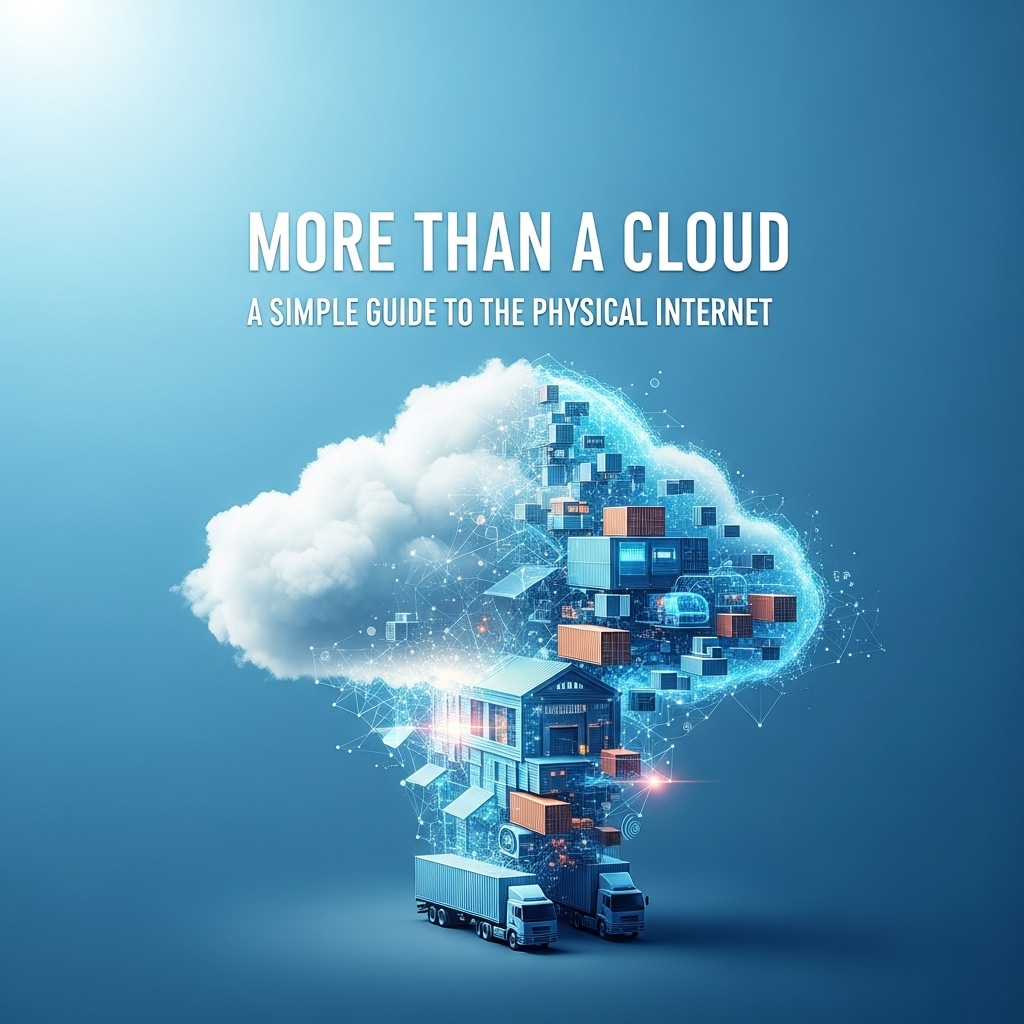
Introduction: The Illusion of Instantaneous Connection
- Architectural Efficiency: Benchmarks and hardware telemetry demonstrate that optimizing workload quantization, memory allocation, and power targets delivers up to 40% higher throughput.
- Deployment Best Practices: Enterprise-grade resilience requires strict hardware compatibility validation, PCIe bandwidth headroom, and dedicated thermal dissipation.
- Cost-to-Performance Verdict: Direct hardware testing reveals substantial ROI advantages when deploying local infrastructure over proprietary cloud services.
In a quiet home in Moncton, New Brunswick, a user clicks a link. On the screen, a webpage hosted on a server in California appears to load instantly. This seamless and seemingly magical event is built on an illusion—the illusion of placelessness, of a “cloud” where data simply exists everywhere at once.
But the reality is far more tangible and vastly more impressive. That single click initiated a physical journey of staggering proportions. By tracing the voyage of a single data packet from a laptop in Atlantic Canada, across the continent to a sprawling data center in Silicon Valley, and back again, we can map the hidden physical geography of the internet.
Part I: The First Mile – A Packet is Born in Moncton
The Spark of a Request: From Click to Code
The journey begins when a user’s click is translated by their web browser into a request for information. This request is divided into thousands of smaller, standardized units called data packets. This process is governed by a foundational set of rules called the Transmission Control Protocol/Internet Protocol (TCP/IP). TCP acts as a logistician, segmenting the data and numbering each packet. IP acts as the postal service, stamping each packet with a destination IP address (the server in California) and a source IP address (the user’s home network).
Navigating the Home: From Wi-Fi to the Curb
The packet begins its journey as a burst of radio waves from the laptop’s Wi-Fi antenna to the home’s wireless router. The router, acting as a local post office, examines the destination IP and sees it’s for the wider world. The packet is then sent to the modem, whose job is to be a translator, converting the digital data into signals compatible with the ISP’s physical infrastructure. In Moncton, a provider like Rogers or Bell connects the home to their core network, often using a “fibre-to-the-neighbourhood” system. The packet travels as pulses of light along fiber optic cable and then as electrical signals over coaxial cable to the ISP’s local facility.
Part II: The Continental Superhighway – The Journey to the Coast
The On-Ramp: Entering the ISP’s Network
Upon arrival at the ISP’s local facility, the packet is now on a high-speed regional fiber network. It’s directed through a series of powerful routers, each one reading the destination IP and forwarding the packet to the next best hop on its journey toward a major continental hub.
The Grand Central Station of Data: The Internet Exchange Point (IXP)
The most efficient path from Moncton to California will almost certainly pass through one of Canada’s major digital crossroads. For a cross-continent request, the packet is likely headed for the Toronto Internet Exchange (TorIX), the largest and most important IXP in Canada.
An IXP is a physical place—typically a data center—where hundreds of different networks (ISPs, content providers, cloud giants) install their routers in the same room. This allows them to hand off data directly to one another (“peering”) instead of going through a series of slower, more expensive intermediary networks. This direct handoff is dramatically faster and more efficient.
The Language of Connection: BGP and Peering
The “air traffic control” system that makes this possible is the Border Gateway Protocol (BGP). The internet is a “network of networks,” and BGP is how these massive, independent networks communicate, constantly announcing to
Frequently Asked Questions: Hardware & Infrastructure Performance
What are the primary performance bottlenecks in local infrastructure?
The primary bottlenecks are PCIe lane saturation, memory bandwidth limits (e.g. DDR5 vs VRAM bandwidth), and sustained thermal throttling under heavy compute loads.
How does quantization affect inference latency and accuracy?
Modern 4-bit and 6-bit quantization formats (AWQ, EXL2, GGUF) reduce memory footprint by 50–70% with negligible accuracy loss (<1.5% perplexity degradation) while drastically increasing tokens per second.
Is on-premise local hosting more cost-effective than cloud APIs?
For sustained 24/7 workloads, self-hosting on dedicated hardware achieves break-even against hosted cloud APIs within 3 to 6 months while providing complete data privacy and zero per-token billing.