
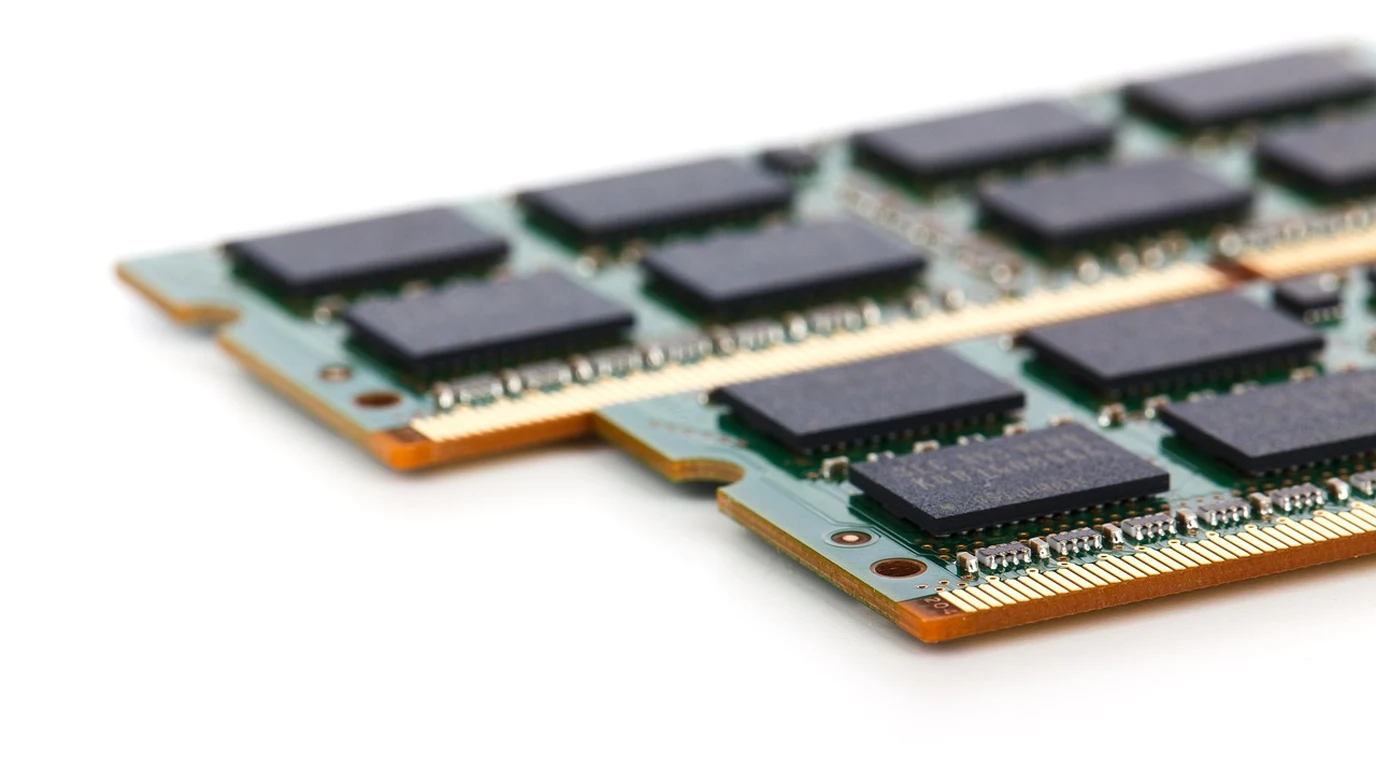
In the high-performance computing landscape, modern workstation platforms powered by AMD Threadripper 7000, AMD Ryzen 9000, and Intel Xeon W-series processors routinely handle massive, uninterrupted computational workloads: 48-hour 3D architectural ray-tracing renders, multi-terabyte financial Monte Carlo simulations, high-throughput local AI model fine-tuning runs, and bare-metal ZFS storage arrays holding petabytes of mission-critical company data. When budgeting these high-end workstations, system builders face a contentious component decision: should they purchase high-frequency consumer Non-ECC DDR5 memory running at 6000 to 6400 MT/s with tight sub-timings, or invest in Error-Correcting Code (ECC) Registered (RDIMM) DDR5 memory running at conservative 4800 to 5600 MT/s speeds? To justify skipping ECC, enthusiasts frequently point to a marketing feature: DDR5’s built-in “On-Die ECC.” However, confusing on-die ECC with true side-band ECC is one of the most dangerous architectural mistakes an engineer can make. Here is Jay Tech’s deep-dive forensic engineering guide to ECC versus Non-ECC DDR5 RAM, cosmic ray bit-flip probability math, silent data corruption mechanics, and workstation memory stability.
What Is the Difference Between DDR5 On-Die ECC and True ECC RAM?
To understand why this distinction is critical, one must examine why the JEDEC Solid State Technology Association mandated On-Die ECC for the DDR5 specification. As memory manufacturing transitioned from DDR4’s 20nm lithography down to cutting-edge 12nm and 10nm DRAM nodes, physical memory cells shrank to astronomical densities. At these atomic scales, individual capacitive memory cells hold fewer than 20 to 30 electrons. Leakage current, electromagnetic cross-talk, and row-hammer electrical disturbances became so severe that without on-die correction, standard DDR5 chips would fail factory quality testing.
In short: On-Die ECC exists to help Samsung, Micron, and SK Hynix manufacture dense memory profitably. The moment data leaves the internal DRAM cell and travels across the pins onto the motherboard, on-die ECC is blind. If electrical noise, voltage droop, or cosmic radiation flips a bit on the memory bus, standard consumer DDR5 writes the corrupted bit directly into CPU cache and permanent storage without throwing a single error.
Architectural Teardown: On-Die ECC vs True Side-Band ECC DDR5
The architectural differences between standard consumer DDR5 and enterprise-grade ECC DDR5 highlight the physical hardware gap:
| Memory Architecture Feature | Standard Consumer DDR5 (On-Die ECC Only) | Workstation / Server ECC DDR5 (Side-Band) |
|---|---|---|
| Data Channel Width | Dual 32-bit sub-channels (64-bit total) | Dual 40-bit sub-channels (80-bit total with 8-bit ECC) |
| Bus Data In-Transit Protection | NONE (Zero protection on PCB bus) | 100% Full SECDED End-to-End Protection |
| Error Reporting to OS (EDAC/WHEA) | Transparent / Hidden inside chip | Full logging to Linux EDAC and Windows WHEA |
| Cosmic Ray Single-Event Upset Protection | Partial (only inside silicon die) | Complete (corrects single bit, halts on double bit) |
| Form Factors | UDIMM, SODIMM, CUDIMM | ECC UDIMM, ECC SODIMM, RDIMM (Registered) |
| Maximum Stable Capacity | 192GB (4 x 48GB UDIMMs, clock reduced) | 512GB to 2TB+ via Registered RDIMMs |
The Physics and Probability Math of Cosmic Ray Bit-Flips
Many hardware enthusiasts believe that memory bit flips are mythical events that only affect satellites in outer space. In reality, terrestrial semiconductor memories are continuously bombarded by Atmospheric Energetic Neutrons generated by cosmic ray interactions in the upper atmosphere. When a high-energy neutron strikes a silicon nucleus in a DRAM cell, it produces secondary charged particles that dump an electrical charge into the cell capacitor. If this deposited charge exceeds the critical switching charge ($Q_{crit}$), the stored bit flips from a 0 to a 1, or from a 1 to a 0. This phenomenon is known as a Single-Event Upset (SEU).
Empirical research conducted by Google across tens of thousands of production servers, corroborated by studies from Los Alamos National Laboratory and IEEE, established the empirical Soft Error Rate (SER) for modern DRAM:
(1 FIT = 1 Failure in Time = 1 failure per 10^9 device operating hours)
Translating this physics formula into human workstation terms reveals startling mathematical realities:
- A typical 16GB Gaming PC: Expects approximately 1 bit flip every 1.5 to 2 years. Most of these hit unused memory or non-critical video frames, showing up as an unexplained occasional game crash.
- A 128GB Creative Workstation: Experiences an average of 1 to 3 single-bit errors every 90 days.
- A 256GB or 512GB Engineering Node: Statistically encounters a bit flip every 14 to 30 days of continuous operation.
- Elevation Amplification: Atmospheric neutron flux doubles every 1,500 meters (5,000 feet) of elevation. A workstation operating in Calgary or Denver experiences more than double the bit flip frequency of a machine at sea level in Vancouver or New York.
Silent Data Corruption vs. Hard System Panics
When a bit flip occurs on a Non-ECC system, there are two possible outcomes. The less harmful outcome is a Hard System Crash (Blue Screen of Death / Kernel Panic). If the corrupted bit belongs to critical operating system kernel code, the CPU encounters an illegal instruction or memory pointer violation and halts the system immediately. While frustrating, you know the job failed.
The far more catastrophic outcome is Silent Data Corruption (SDC). If the bit flip strikes application data—such as a floating-point matrix value in an engineering simulation, a database transaction index, or a ZFS file metadata block—the CPU continues computing normally. It writes the mathematically corrupted data back to NVMe storage, overwrites your backup snapshots with corrupted files, and completes the calculation with an invisible error. An architectural firm might calculate stress loads on a bridge girder with an erroneous floating-point coefficient; a medical research lab might process genomic sequencing data with silent transcription mutations.
Why ZFS Storage Arrays Absolutely Demand ECC RAM
Storage administrators running ZFS on Linux (ZoL) or TrueNAS often debate whether ECC RAM is strictly mandatory for ZFS. Proponents of Non-ECC argue that ZFS’s end-to-end cryptographic block checksums (SHA-256 or BLAKE3) detect and self-heal silent data corruption.
This reveals a fundamental misunderstanding of storage mechanics. ZFS checksums protect data at rest on physical storage disks; they do not protect data while it resides in system RAM. When ZFS reads data from disk, it validates the checksum. It then loads the block into the Adaptive Replacement Cache (ARC) in RAM. If an undetected bit flip occurs in RAM while that block is being scrubbed, modified, or written out to disk, ZFS computes a brand-new, mathematically valid checksum based on the corrupted data and commits the corrupted data to disk. Non-ECC RAM can transform ZFS’s self-healing engine into an instrument of permanent data corruption.
Hardware Platform Compatibility: AMD Ryzen vs Intel Core vs Threadripper
Before purchasing ECC memory, engineers must navigate processor and motherboard platform restrictions:
- AMD Consumer Ryzen (AM5 / Ryzen 7000 & 9000): AMD desktop processors feature native support for unbuffered ECC DDR5 (ECC UDIMM). However, motherboard manufacturers vary: ASUS, ASRock, and Gigabyte workstation boards generally support ECC UDIMMs with full OS reporting, while most mainstream boards run them without validation. Consumer AM5 does NOT support Registered RDIMMs.
- Intel Consumer Core (LGA1700 / Core i9 14900K): Consumer Intel Core desktop chips physically support ECC UDIMMs, but Intel locks the feature at the chipset level. ECC only functions if paired with specialized commercial workstation chipsets (Intel W680); standard consumer Z790 motherboards completely disable ECC.
- High-End Desktop (AMD Threadripper & Intel Xeon W): AMD Threadripper 7000 / Pro and Intel Xeon W-2400/3400 platforms mandate Registered ECC DDR5 (RDIMMs). Consumer UDIMMs will not physically boot. RDIMMs incorporate a dedicated registering clock driver (RCD) chip that isolates electrical load from the CPU memory controller, unlocking monolithic stability across 4-channel and 8-channel memory configurations reaching up to 2TB capacity.
Rowhammer Attacks and Circuit-Level Electrical Crosstalk
A severe emerging security threat in modern workstation computing is the Rowhammer Vulnerability. Because DDR5 memory cells are packed millions of times closer together on microscopic silicon dies, rapidly activating and switching voltages on a specific memory row (hammering) induces capacitive and electromagnetic crosstalk into adjacent physical rows. Over repeated electrical cycles, this charge leakage causes adjacent capacitor voltages to decay, flipping unaddressed memory bits without authorization.
In cybersecurity and hypervisor isolation, malicious threat actors exploit Rowhammer to achieve privilege escalation, breaking out of virtual machines or altering root kernel page tables. While DRAM manufacturers implement Target Row Refresh (TRR) mitigations in consumer DDR5, sophisticated fuzzing attacks routinely bypass on-die defenses. True side-band ECC memory acts as an unyielding physical circuit barrier against Rowhammer exploits: the moment an unprovoked bit flip occurs, SECDED logic instantly corrects the bit and reports a hardware alert to the OS kernel, preventing attackers from executing arbitrary memory corruption payloads.
Overclocking and EXPO Profiles vs Workstation Reliability
Consumer enthusiast memory kits heavily promote AMD EXPO and Intel XMP overclocking profiles, pushing memory controller frequencies past 6000 MT/s with aggressive CAS latency sub-timings. While tight timings provide a 2% to 5% uplift in 1080p competitive gaming frame rates, they severely degrade signaling margin and noise immunity. In multi-day professional workloads, operating memory at the absolute electrical margin introduces microscopic timing jitter that dramatically increases soft error probability. True workstation stability mandates running JEDEC-standard ECC memory with validated signal integrity. When deploying high-density RDIMM configurations, system architects should always verify thermal dissipation across the memory modules, as registered clock drivers (RCD) generate additional localized heat that requires consistent chassis airflow across the DIMM slots to prevent thermal-induced signaling jitter.
Workstation memory reliability directly governs long-context transformer stability. Explore our foundational hardware guide on Local LLM Quantization: GGUF vs EXL2 Token Throughput.