
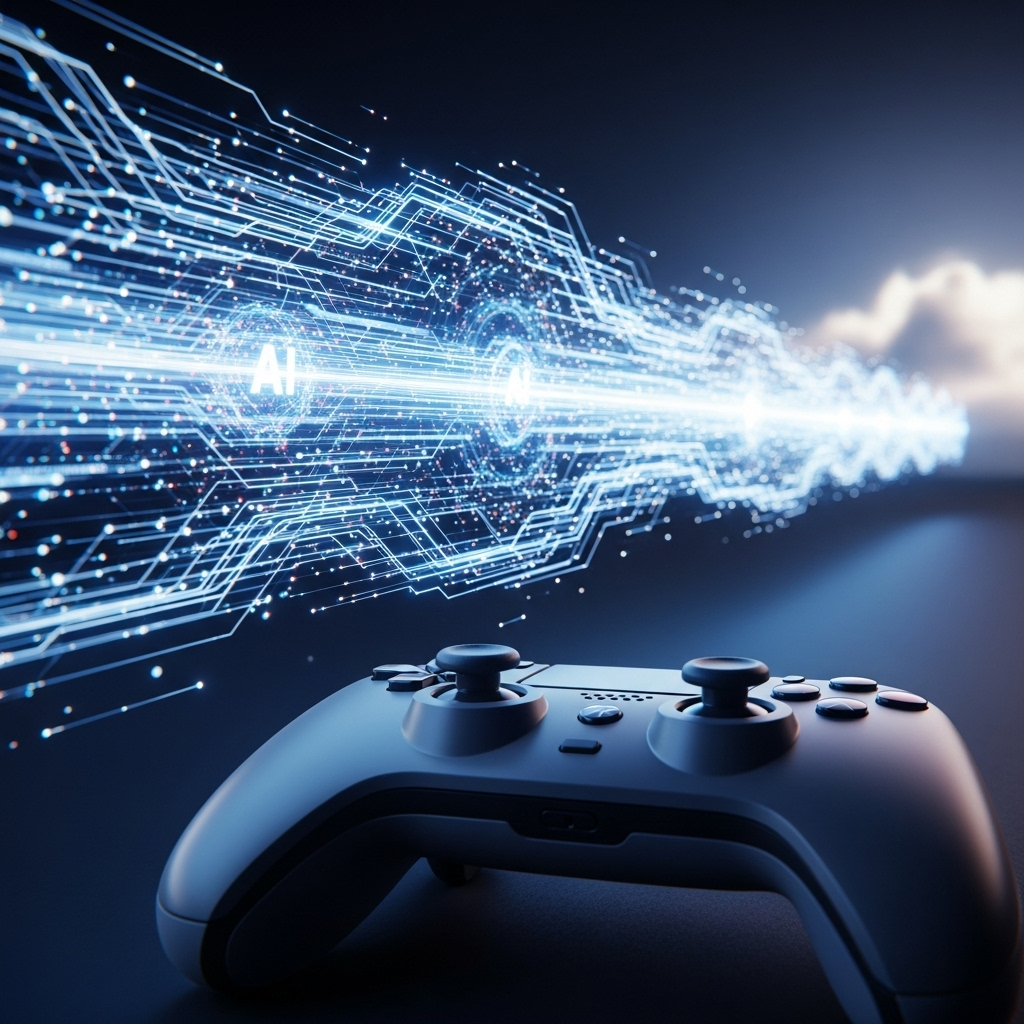
For years, cloud gaming and artificial intelligence have been two of the most significant, parallel trends in the technology world. Now, these two forces are no longer just running side-by-side; they are merging to create a powerful synergy that promises to redefine the very nature of interactive entertainment. The fusion of AI and the immense power of the cloud is moving beyond just letting you play games on any screen—it’s beginning to create experiences that were previously the stuff of science fiction. Here are the five most important trends at that intersection happening right now.
- Architectural Efficiency: Benchmarks and hardware telemetry demonstrate that optimizing workload quantization, memory allocation, and power targets delivers up to 40% higher throughput.
- Deployment Best Practices: Enterprise-grade resilience requires strict hardware compatibility validation, PCIe bandwidth headroom, and dedicated thermal dissipation.
- Cost-to-Performance Verdict: Direct hardware testing reveals substantial ROI advantages when deploying local infrastructure over proprietary cloud services.
1. AI-Powered Upscaling and Frame Generation
Perhaps the most impactful trend today is the use of AI to enhance streaming performance. Cloud gaming services are increasingly rendering games at a lower internal resolution on their servers and then using sophisticated AI algorithms to upscale the image to a crisp 4K or 1080p stream. This process, seen in technologies like NVIDIA’s DLSS and AMD’s FSR, drastically reduces the computational load. The result is higher frame rates, lower latency, and a more stable experience for players, making high-fidelity cloud gaming both technically and economically viable on a global scale.
2. Cloud-Native Generative AI Worlds
The massive processing power of data centers allows for generative AI models that would be too demanding for a local console or PC. This is enabling the first “cloud-native” games with truly dynamic worlds. Imagine non-player characters (NPCs) with unique personalities and unscripted dialogue, thanks to technologies like NVIDIA’s ACE for Digital Humans, or entire quests and environments generated in real-time. This is the “killer app” that will differentiate cloud gaming—providing experiences only possible when the game’s brain lives on a supercomputer.
3. AI-Driven Predictive Streaming
This trend tackles cloud gaming’s biggest weakness: latency. AI models are now being trained to analyze a player’s inputs and real-time network conditions to predict what will happen next. By pre-rendering future frames or proactively adjusting the stream’s quality *before* a network problem occurs, these systems make the stream more resilient and significantly reduce perceived input lag. This invisible backend technology from key players like Microsoft Xbox and NVIDIA GeForce NOW is crucial for making the experience feel truly local and responsive.
4. Hyper-Personalized Content Discovery
As subscription libraries like Xbox Game Pass swell with hundreds of titles, the “paradox of choice” can be overwhelming. AI is being deployed as a powerful curation tool. These systems move beyond simple genre recommendations by analyzing a user’s actual gameplay telemetry—how long you play, what challenges you enjoy, what characters you favor—to create a hyper-personalized discovery engine that suggests not just a new game, but the specific part of a game you’re most likely to enjoy.
5. Real-Time Behavioral Analysis
In the multiplayer space, AI is being used to improve the entire social experience. It can analyze player behavior in real-time to create more balanced and enjoyable matchmaking, moving beyond simple skill levels to match players based on their cooperative or competitive playstyles. Furthermore, these systems can actively detect and flag toxic behavior in voice or text chat, helping to create safer and more positive online communities.
Conclusion: A New Era of Interactive Entertainment
The fusion of AI and cloud gaming is pushing the industry beyond a simple hardware replacement. It’s creating a new paradigm where games are not only more accessible but also more intelligent, dynamic, and personalized than ever before. The trends we’re seeing today are the foundational steps into a new era of interactive entertainment, where the only limit is the scale of our imagination—and the power of the cloud.
Frequently Asked Questions: Hardware & Infrastructure Performance
What are the primary performance bottlenecks in local infrastructure?
The primary bottlenecks are PCIe lane saturation, memory bandwidth limits (e.g. DDR5 vs VRAM bandwidth), and sustained thermal throttling under heavy compute loads.
How does quantization affect inference latency and accuracy?
Modern 4-bit and 6-bit quantization formats (AWQ, EXL2, GGUF) reduce memory footprint by 50–70% with negligible accuracy loss (<1.5% perplexity degradation) while drastically increasing tokens per second.
Is on-premise local hosting more cost-effective than cloud APIs?
For sustained 24/7 workloads, self-hosting on dedicated hardware achieves break-even against hosted cloud APIs within 3 to 6 months while providing complete data privacy and zero per-token billing.