
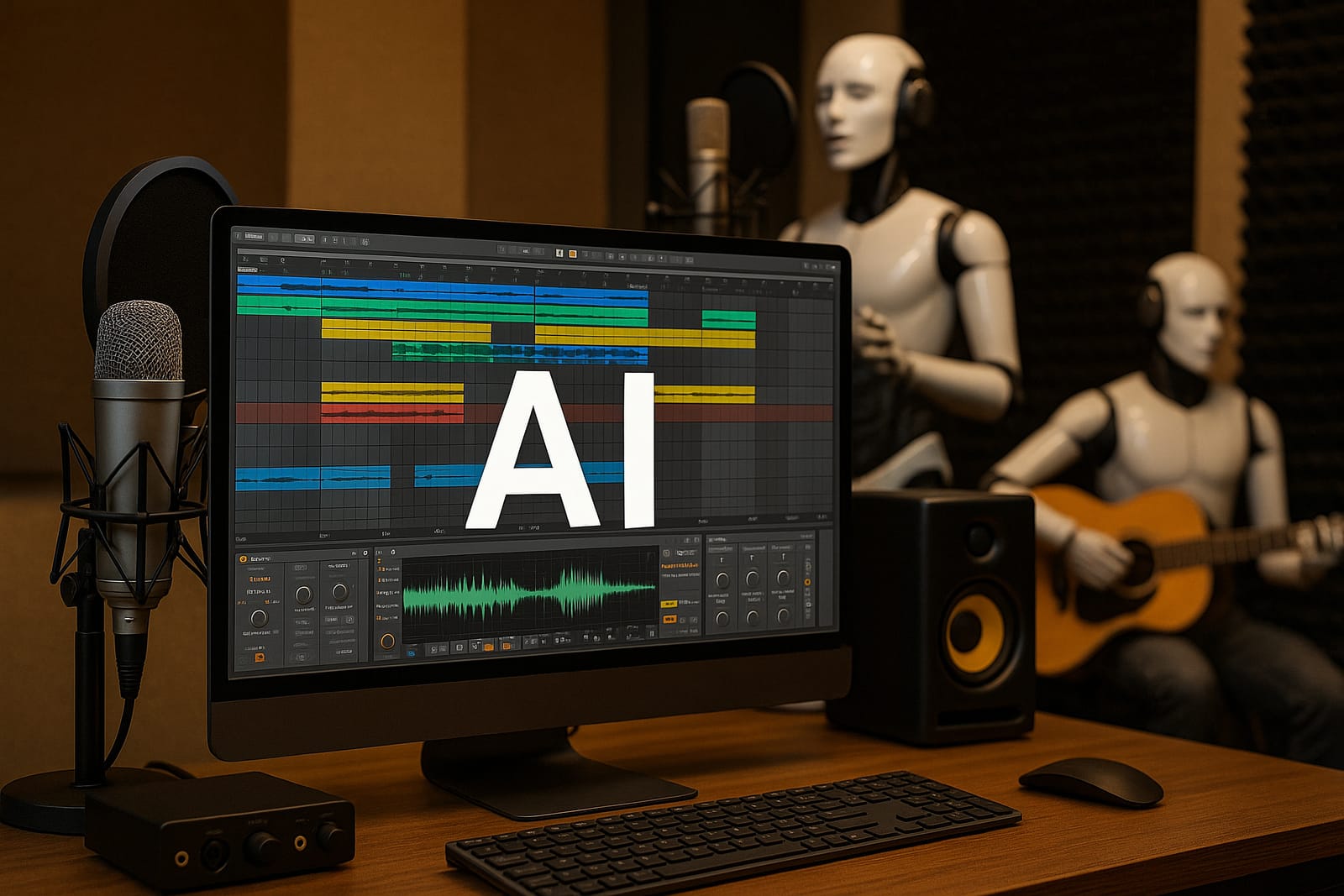
It starts with a simple text prompt: “Create a folk ballad in the style of Joni Mitchell about a lonely lighthouse on the coast of Maine.” Seconds later, a machine learning model delivers a complete song—haunting melody, intricate guitar arrangement, and lyrics that sound eerily authentic. This scenario is no longer science fiction; it is the reality of music creation in 2025, and it’s shaking the foundations of the creative world.
- Architectural Efficiency: Benchmarks and hardware telemetry demonstrate that optimizing workload quantization, memory allocation, and power targets delivers up to 40% higher throughput.
- Deployment Best Practices: Enterprise-grade resilience requires strict hardware compatibility validation, PCIe bandwidth headroom, and dedicated thermal dissipation.
- Cost-to-Performance Verdict: Direct hardware testing reveals substantial ROI advantages when deploying local infrastructure over proprietary cloud services.
Generative AI has officially entered the recording studio, raising profound questions that we are only beginning to answer: Who, if anyone, owns an AI-generated song? Can a machine be genuinely creative? And what does this technological shift mean for the future of human artists?
The Copyright Conundrum: Who Owns the Rights?
The central legal challenge of AI music is that modern copyright law was built to protect one thing: works of human authorship. When you remove the human from the creative process, the legal framework begins to crumble.
Currently, the consensus from bodies like the U.S. Copyright Office is that a work generated entirely by an AI, without significant human input or modification, cannot be copyrighted. It may fall into the public domain. However, the situation is rarely that simple. This creates a complex legal gray area with several competing arguments:
- The AI Developer: Did the company that built the AI model create the conditions for the song’s existence? They might argue for ownership.
- The User: Did the user’s creative prompt and curation qualify as sufficient human authorship? The person who wrote the “Joni Mitchell” prompt may claim they are the author.
- The Training Data: Most AI models learn by analyzing vast datasets of existing music. If an AI was trained on thousands of hours of copyrighted songs, are the original artists entitled to a share of the output? This is the basis for several high-profile lawsuits currently underway.
Until the courts and legislatures establish clear precedent, the ownership of AI-generated music will remain one of the most contentious legal issues in technology.
The Question of Creativity and Authenticity
Beyond the legal debate lies a deeper philosophical question: Is AI-generated music truly art? A machine learning model doesn’t have a soul, a broken heart, or a political conviction. It hasn’t lived a human life. It generates music by recognizing and reassembling statistical patterns from the data it was trained on.
Critics argue that this process is merely sophisticated mimicry, not genuine creation. They contend that true art requires intention, emotion, and lived experience—qualities a machine fundamentally lacks. The output, they say, is an echo of past human creativity, not a new voice.
Proponents, however, see AI as a powerful new tool, no different from the synthesizers or drum machines that revolutionized music in previous decades. They argue that AI can be a collaborative partner, helping human artists overcome creative blocks, generate new ideas, and explore sonic palettes they never could have imagined on their own. In this view, the authenticity comes from how the human artist uses and shapes the AI’s output.
The Industry’s Unsteady Path Forward
The music industry is scrambling to adapt. Record labels, streaming services, and artist advocacy groups are grappling with how to integrate this technology responsibly. We are beginning to see key policy shifts:
- Watermarking and Disclosure: A growing consensus is forming around the need for clear identification of AI-generated content. This could involve digital watermarking to ensure transparency for listeners.
- Licensing and Royalties: New licensing models are being proposed to compensate original artists whose work is used in AI training data, potentially creating a new revenue stream.
- Platform Policies: Streaming giants like Spotify and Apple Music are developing policies to handle the flood of AI music, trying to balance innovation with the prevention of fraud (e.g., uploading AI tracks that mimic famous artists to steal royalties).
A New Duet for the Digital Age
The rise of AI in music is not a simple story of technology replacing artists. It is the beginning of a complex, sometimes contentious, but ultimately collaborative new era. AI presents as many opportunities for creative expansion as it does challenges to our existing legal and ethical structures.
The path forward will require a delicate balance: fostering innovation while protecting the rights and livelihoods of human creators. How we navigate this challenge will not only define the future of music but will also set a precedent for the integration of AI into all facets of human culture.
Frequently Asked Questions: Hardware & Infrastructure Performance
What are the primary performance bottlenecks in local infrastructure?
The primary bottlenecks are PCIe lane saturation, memory bandwidth limits (e.g. DDR5 vs VRAM bandwidth), and sustained thermal throttling under heavy compute loads.
How does quantization affect inference latency and accuracy?
Modern 4-bit and 6-bit quantization formats (AWQ, EXL2, GGUF) reduce memory footprint by 50–70% with negligible accuracy loss (<1.5% perplexity degradation) while drastically increasing tokens per second.
Is on-premise local hosting more cost-effective than cloud APIs?
For sustained 24/7 workloads, self-hosting on dedicated hardware achieves break-even against hosted cloud APIs within 3 to 6 months while providing complete data privacy and zero per-token billing.