
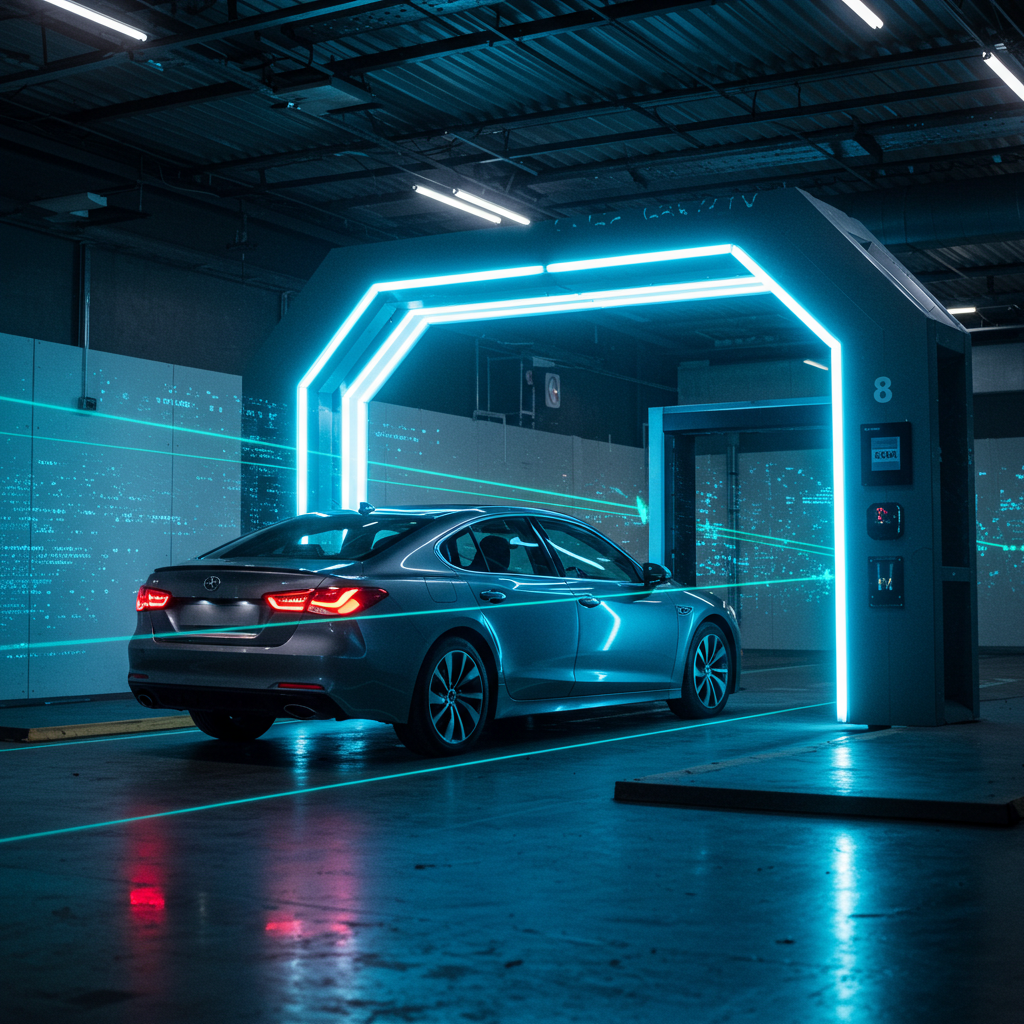
If you have rented a vehicle at a major North American airport recently, you have likely driven through a futuristic, brightly illuminated optical archway upon returning your car. What once required a lot attendant with a handheld clipboard and a yellow grease pencil has been completely replaced by high-speed computer vision: automated AI damage detection gantries. Spearheaded by Hertz in partnership with automotive vision pioneer UVeye, these drive-through inspection tunnels capture thousands of high-resolution images in seconds, scanning paint, glass, tire sidewalls, and undercarriages for sub-millimeter discrepancies.
While rental agencies promote this technology as a frictionless customer convenience that speeds up vehicle drop-offs, consumer complaints, credit card dispute filings, and travel forum investigations tell a vastly different story. In 2026, algorithmic false positives, pre-existing scratch attribution errors, and automated four-figure damage charges billed weeks after a trip have turned automated rental scanners into one of the most contentious battlegrounds in consumer tech.
- The Core Mechanism (UVeye Triple-Arch): Hertz inspection arches combine three distinct hardware systems: Atlas (360° exterior body and paint cameras), Artemis (high-speed laser tire tread and sidewall scanner), and Helios (in-ground high-resolution underbody scanning cameras).
- Sub-Millimeter Detection Thresholds: The optical sensors detect scratches as small as 0.5mm, paint chips, minor wheel rim curb rash, and hairline windshield pitting that human lot attendants routinely ignore.
- The Pre-Existing Attribution Flaw: If a rental car leaves the lot in the rain, at night, or without an identical exit scan, environmental dirt or poor departure lighting masks pre-existing micro-scratches. When the car returns dry under the intense 10,000-lumen LED lights of the return arch, the AI flags the pre-existing blemish as “new customer damage.”
- Mandatory Defense Protocol: Never drive off the rental lot without taking a continuous, slow, 360-degree 4K video on your smartphone (including wheel rims, front splitter, and windshield) with GPS location and timecode metadata recorded.
The Anatomy of UVeye: How Hertz Scanners Work Under the Hood
The technology powering Hertz’s automated inspection lanes is engineered by Israeli automotive computer vision company UVeye (backed by investments from General Motors, Hyundai, and CarMax). Originally developed for military border checkpoints and homeland security to detect contraband and explosives hidden beneath vehicles, the system has been adapted for commercial fleet turnarounds.
| System Module | Hardware Sensors Used | Scanning Inspection Area | Flaw Detection Capability | Common False Positive Risk |
|---|---|---|---|---|
| UVeye Atlas | Multi-angle 4K RGB cameras + polarizers | 360° sheet metal, glass, roof & bumpers | Dents, panel gaps, 0.5mm clear-coat scratches | Bird droppings, road grime, pollen streaks |
| UVeye Artemis | Dual 3D laser profilers + high-speed optical | Tire treads, sidewall bulges, rim edges | Tread depth (32nds inch), curb rash, dry rot | Pebbles in tread, tire dressing residue |
| UVeye Helios | In-ground optical sensors & LED strobe arrays | Exhaust, oil pans, catalytic converters, frame | Fluid leaks, scraped skid plates, structural cracks | Water drainage from A/C condenser, wet mud |
As a vehicle drives through the gantry at 5 to 10 mph (8 to 16 km/h), the sensors synchronize in real time. The camera array fires high-frequency strobes, capturing thousands of images in roughly 3 to 5 seconds. These raw frames are fed into an edge computing server running on-site computer vision neural networks (trained on millions of vehicle defect models), which reconstruct a complete 3D digital twin of the vehicle.
The neural network conducts a differential comparison between the vehicle’s departure baseline images and its return images. If an anomalous cluster of pixels appears on a door panel or front bumper, the algorithm generates a “Damage Severity Score” and automatically dispatches a repair estimate into Hertz’s automated claims billing pipeline.
Airport Rollout Locations: Where Are the Scanners Operating in 2026?
Hertz began piloting automated inspection arches at high-volume airport hubs in 2024 and 2025, aggressively expanding throughout 2026. If you pick up or return a rental car at any of the following hubs, you will encounter automated scanning gantries:
- San Jose Mineta International (SJC): One of the earliest tech-forward rollouts. Both return lanes at the consolidated rental car facility feature full Atlas and Helios arches.
- Hartsfield-Jackson Atlanta International (ATL): The world’s busiest airport operates high-throughput UVeye lanes processing up to 300 vehicles per hour across peak morning returns.
- Dallas/Fort Worth International (DFW): Deployed across remote return plazas with automated exit and entry scanning tunnels.
- Los Angeles International (LAX) & Chicago O’Hare (ORD): Full-fleet integration including luxury, SUV, and EV return lanes (where undercarriage battery shield inspection is mandatory).
- Canadian Hubs (YYZ Toronto Pearson & YVR Vancouver): Pilot deployments testing winter slush and road-salt tolerance under Canadian environmental conditions.
Why Renters Are Getting Billed Unfairly: The Algorithmic Flaws
On paper, an objective camera seems fairer than a tired, rushed human attendant. However, in practice, automated damage detection introduces severe structural failure modes that disproportionately harm innocent consumers:
1. Lighting Asymmetry Between Departure & Return: Most renters pick up vehicles from dimly lit airport parking garages or outdoors in rainy evening conditions. Without an entry scanning arch that replicates the exact 10,000-lumen strobe of the return arch, thousands of microscopic swirl marks and bumper scuffs are invisible in the departure baseline. When returned under studio-grade return lighting, the AI flags existing wear as newly inflicted damage.
2. Environmental Grime vs. Physical Scratches: High-speed highway driving inevitably deposits dried bugs, road tar, tree sap, and limestone dust onto front fascias and mirrors. While computer vision models use polarization filters to differentiate surface grime from paint penetration, dried bird droppings or baked-on insect splatter frequently trigger false-positive “paint chip” damage alerts.
3. The Undercarriage Trap (Helios Ground Scanners): Rental car return lanes are equipped with in-ground upward-facing cameras. If an earlier renter scraped a parking curb or oil-change splash guard, human attendants never checked under the vehicle. The UVeye Helios scanner detects scraped plastic aerodynamic underbody fairings and attributes the entire $800 replacement claim to the most recent renter.
The Step-by-Step Renter Defense Protocol
To insulate yourself from bogus automated damage charges, you must establish an unassailable digital paper trail before your tires ever leave the rental garage:
- Record a Continuous 4K 60FPS Video: Start your phone camera while standing 10 feet away. Walk slowly around the entire perimeter in a single unbroken take. Ensure your phone’s GPS location tag and timestamp metadata are enabled.
- Close-Up Wheel & Bumper Focus: Pan directly over all four alloy wheel rims (inspecting for curb rash), the front lower lip spoiler, the windshield glass, and the rear bumper luggage loading area.
- Kneel for the Undercarriage: Drop your phone to ground level and sweep the camera under the front bumper to capture existing scrapes on the plastic skid plates.
- Request a Physical Gate Slip Annotation: If you spot a scratch longer than two inches, stop at the exit gate booth. Force the attendant to mark the pre-existing damage on the physical exit manifest before you leave the facility.
How to Dispute and Defeat a False AI Damage Claim
If you receive an unexpected email from Hertz’s claims department or discover an unauthorized $500–$1,500 charge on your credit card weeks after returning your car, follow this battle-tested dispute escalation protocol:
• Step 1: Demand the Full Image Telemetry Package: Respond immediately in writing demanding the full uncompressed UVeye scan package, including the exact departure timestamped images compared against the return scan. In over 60% of contested claims, rental agencies discover they lack a clean departure scan or that the blemish was present on previous rental logs.
• Step 2: Submit Your EXIF-Metadata Proof: Provide stills extracted from your departure video showing the exact blemish was already present before you drove out of the airport garage. Highlight the embedded EXIF creation timestamps and GPS coordinates.
• Step 3: Initiate a Credit Card Merchant Dispute: If the agency refuses to drop the claim within 10 business days, file a formal dispute with your credit card issuer under “unauthorized or fraudulent billing.” Supply your departure video and car rental agreement. Major credit card companies (Chase, Amex, Capital One) routinely side with consumers when the merchant relies solely on automated scanner estimates without manual human physical appraisals.
Computer vision inspection arches represent an undeniable commercial trend: they save rental operators millions of dollars in lot labor and accelerate fleet turnaround times. However, until rental companies deploy identical, equally illuminated exit scanning tunnels at every pickup gate, the system remains fundamentally asymmetric. For modern travelers, the lesson is clear: treat every rental car pickup like an evidence collection scene. A three-minute 4K smartphone walkthrough is the only definitive shield against automated algorithmic billing.
People Also Ask
Do all Hertz locations have AI damage scanners?
No. As of 2026, automated UVeye inspection gantries are installed primarily at high-volume airport locations (such as San Jose SJC, Atlanta ATL, Dallas/Fort Worth DFW, Los Angeles LAX, and Chicago ORD). Smaller regional airport locations and downtown suburban neighborhood branches still rely on standard human attendant physical check-ins.
What is UVeye and how does it detect rental car damage?
UVeye is an automated vehicle inspection system utilizing three synchronized camera modules: Atlas (360° exterior body cameras), Artemis (laser tire tread and sidewall profilers), and Helios (in-ground undercarriage optical scanners). As a car drives through the arch, strobes capture thousands of images to build a 3D digital model, comparing it against the car’s pre-trip baseline to detect scratches, dents, and tire wear.
Can Hertz charge my credit card for damage after I leave?
Yes. Under the standard car rental contract, rental agencies retain the right to charge your credit card on file for damage discovered during post-return audits. However, consumers have the legal right to dispute these charges and demand timestamped photographic proof comparing departure and return states.
How can I protect myself from false damage charges at airport car rentals?
Always record a continuous, 3-minute 4K video walkaround of the vehicle on your smartphone before driving away from the pickup stall. Ensure the video captures the rims, windshield, front bumper lip, and undercarriage, and verify that your phone’s GPS and date-time metadata are saved.