
You’ve poured your heart, soul, and significant capital into building a workstation that’s a true extension of your genius. Whether you’re a colorist meticulously grading footage, an architect rendering intricate models, a financial analyst staring down complex dashboards for hours, or an industrial designer perfecting every curve, your display isn’t just a window—it’s the canvas for your livelihood. And if you’re like many of the sharpest minds I know, you’ve felt that gnawing anxiety: the fear of image retention, the subtle ghosting of a static UI element, or the dread of a multi-thousand-dollar panel succumbing to burn-in, slowly degrading your visual fidelity and, frankly, your peace of mind. You’ve heard the whispers, read the forum debates, and maybe even experienced the frustration firsthand. You’re not just buying a display; you’re investing in a critical tool, and you need to know it will stand the test of time, delivering unwavering performance without compromise. That’s precisely why we’re having this conversation.
For professional desktop and industrial visualization requiring absolute longevity, extreme sustained brightness, and zero burn-in risk over 100,000+ hours, true MicroLED is the undisputed technical victor. However, its prohibitive cost and modular nature currently limit practical adoption. Advanced OLEDs (QD-OLED, WOLED with MLA) offer superior contrast and color volume at accessible price points, but demand careful usage to mitigate inherent organic degradation and burn-in, especially for static UI elements.
Why Your Pixels Age Differently: The Fundamental Physics of Light Emission
Let’s pull back the curtain on what’s truly happening at the subpixel level, because understanding the core physics is the key to dispelling myths and making informed decisions. The longevity and burn-in characteristics of any display fundamentally boil down to the materials used to generate light and how those materials react to sustained electrical current and heat.
The Unyielding Nature of MicroLED: Inorganic Gallium Nitride at Work
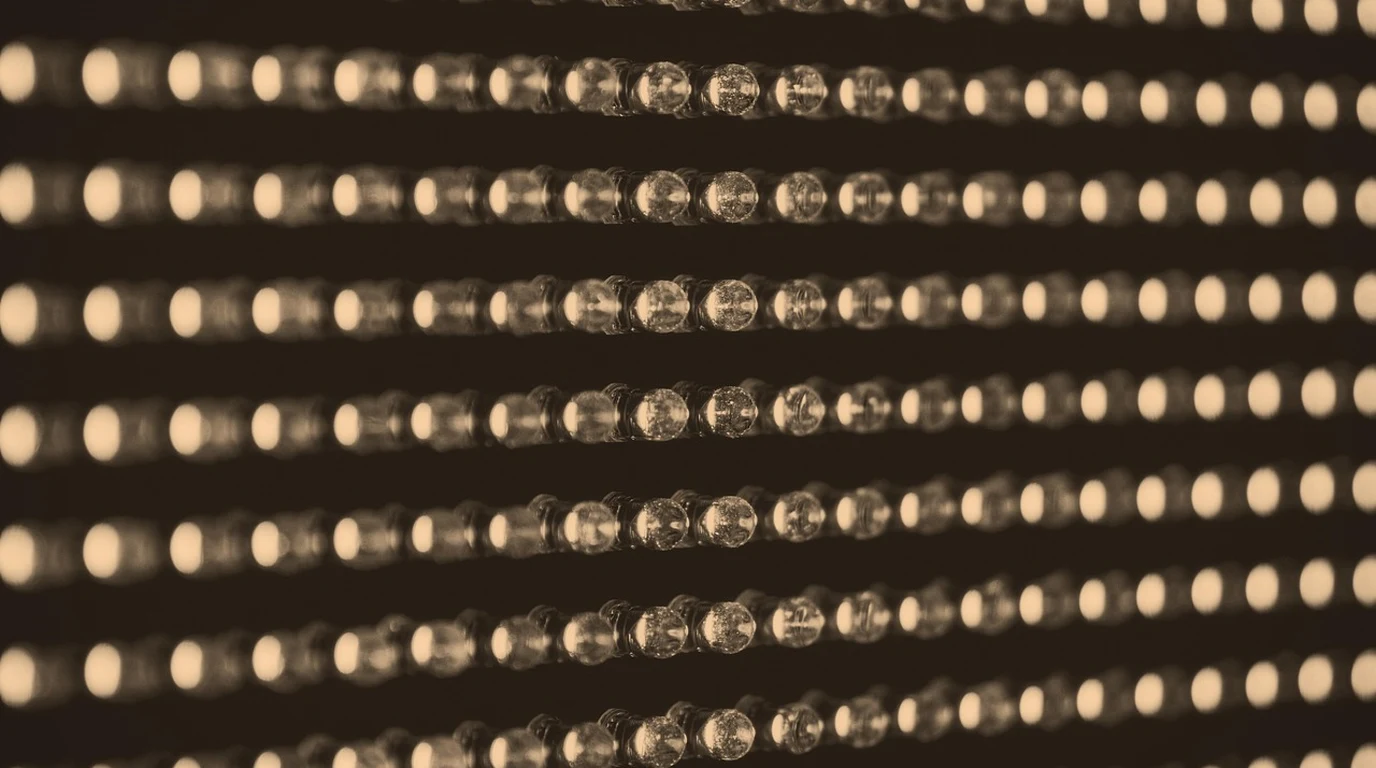
Imagine a display where every single pixel is its own tiny, robust light source, built from materials as stable as the silicon in your CPU. That’s the promise, and reality, of true MicroLED. At its heart are microscopic inorganic gallium nitride (GaN) LEDs, each measuring less than 50 micrometers. These aren’t the organic compounds found in OLEDs; they are solid, crystalline semiconductors. Think of them like miniature versions of the powerful LEDs illuminating stadiums or your car’s headlights, but shrunk down to an unimaginable scale and packed by the millions into a display panel.
The critical distinction here is “inorganic.” Unlike organic materials, inorganic crystals like GaN do not degrade under sustained high current densities. They don’t have the same molecular bonds that break down over time when exposed to energy. This inherent stability means a MicroLED subpixel can be driven to incredibly high luminance levels—exceeding 4,000 nits for full-field brightness, not just peak highlights—and maintain that output for an astonishingly long time, often quoted at over 100,000 hours of operational life, without any risk of static image retention or burn-in. For professionals who demand consistent, uncompromised brightness and color accuracy over decades, especially with static UI elements like toolbars, timelines, or financial tickers, this is a game-changer. The light emission is direct, pure, and incredibly efficient, leading to a display that is, from a material science perspective, virtually immortal in typical usage scenarios.
The Delicate Dance of OLED: Organic Polymers and Their Lifespan
Now, let’s turn our attention to OLED, a technology that has rightly captivated us with its perfect blacks and stunning contrast. OLED stands for Organic Light-Emitting Diode, and that “Organic” is where the story of longevity and burn-in truly begins. OLED displays utilize organic carbon-based electroluminescent polymers that emit light when an electric current passes through them. These organic materials, while brilliant at producing vibrant colors and deep blacks, are inherently subject to cumulative thermal and electrical degradation over time. It’s not a flaw in the design; it’s a fundamental characteristic of the materials themselves.
The degradation isn’t uniform across all colors. Specifically, the blue organic emitters in OLED panels exhibit a shorter half-life compared to their red and green counterparts. This means that if a blue subpixel is driven harder or more frequently than others, it will degrade faster, leading to a color shift or, in severe cases, permanent image retention (burn-in) where the degraded blue subpixels can no longer produce their full luminance. This differential aging is why OLED manufacturers employ sophisticated algorithms and compensation cycles:
- Pixel-Shift Algorithms: These subtly move the entire image by a few pixels every few minutes, imperceptibly to the human eye, to ensure no single subpixel is constantly illuminated in the exact same spot.
- Aggressive ABL (Automatic Brightness Limiter): This feature dynamically reduces the overall display brightness when a significant portion of the screen is bright, preventing excessive current draw and heat buildup that accelerates degradation. While crucial for longevity, it can be frustrating for professionals needing sustained high brightness across the entire canvas.
- Periodic Compensation Cycles: Often run automatically when the display is in standby, these cycles analyze the degradation of individual subpixels and adjust their drive voltage to compensate, attempting to maintain uniform brightness and color balance.
While these measures are incredibly effective at mitigating burn-in for most consumer usage, for professional applications involving static elements displayed for many hours daily, the risk, though reduced, remains a tangible concern. The trade-off for OLED’s unparalleled contrast and instantaneous pixel response is a need for more mindful usage and an acceptance of a finite, albeit long, operational lifespan before noticeable degradation begins.
The Hidden Costs of Cutting-Edge: Manufacturing Realities & Yield Hurdles
Understanding the physics is one thing, but bringing these technologies to market at scale is an entirely different beast. The manufacturing processes for MicroLED and OLED are worlds apart, and these differences directly translate into the astronomical cost disparity we see today.
The MicroLED Conundrum: Precision, Scale, and the Mass Transfer Challenge
The biggest bottleneck, the Everest of MicroLED manufacturing, is the “mass transfer” process. Imagine trying to pick up millions of individual grains of sand, each a tiny LED, and place them with sub-micron precision onto a substrate, ensuring perfect alignment and electrical connection, all without a single dead pixel. That’s essentially what mass transfer entails. For a 4K display, you’re looking at over 24 million individual subpixels (8.3 million pixels x 3 subpixels). Each of these microscopic RGB dies must be precisely placed, and the yield rate—the percentage of perfectly placed and functional dies—must be incredibly high for a panel to be commercially viable.
Current mass transfer technologies are improving rapidly, but they are still incredibly complex and expensive. The precision required is mind-boggling, and any imperfection, a misaligned die, a faulty bond, or a dead subpixel, results in a defect that can render an entire section or the whole panel unusable. This low yield rate for perfect panels is the primary driver behind the exorbitant cost of commercial MicroLED displays today. We’re talking about modular tiles that, when assembled, can cost tens of thousands, if not hundreds of thousands, of dollars for a display size comparable to a high-end professional monitor. This isn’t just a premium; it’s a reflection of the immense engineering challenge and the current state of manufacturing maturity.
OLED’s Advantage: Mature Roll-to-Roll Manufacturing & Economies of Scale
In stark contrast, OLED panel manufacturing has benefited from decades of refinement and investment. The industry has largely transitioned to highly efficient, large-scale roll-to-roll or large-substrate deposition processes. Think of it like printing, but with organic light-emitting materials. This allows for the simultaneous production of multiple panels on a single large sheet of glass or flexible substrate, dramatically reducing the per-panel cost. The processes are mature, highly automated, and benefit from significant economies of scale.
While OLED manufacturing still has its complexities—ensuring uniformity, preventing contamination, and managing material degradation during production—these challenges are well-understood and largely overcome. The result is a technology that can be produced in high volumes at a fraction of the cost of MicroLED, making it accessible for a wide range of consumer and professional applications. This maturity is why you can buy a stunning 4K OLED monitor or TV for a few hundred to a few thousand dollars, while a comparable MicroLED display remains firmly in the realm of ultra-high-end industrial, commercial, or bespoke luxury installations.
| Feature/Metric | MicroLED (True Inorganic) | Advanced OLED (QD-OLED / WOLED w/ MLA) | Implication for Professionals |
|---|---|---|---|
| Subpixel Material | Inorganic Gallium Nitride (GaN) crystals | Organic carbon-based electroluminescent polymers | Fundamental difference in degradation resistance and longevity. |
| Burn-In / Image Retention Risk | Virtually zero risk over 100,000+ hours. Inorganic materials do not degrade. | Low but present risk, especially with static UI elements or logos. Blue subpixels degrade faster. Mitigated by pixel shift, ABL, compensation cycles. | Critical for applications with static elements (CAD, financial, video editing UIs). MicroLED offers peace of mind. OLED requires careful management. |
| Sustained Full-Field Luminance | Exceeds 4,000 nits without ABL. Consistent brightness across entire screen. | Peak brightness 1000-2000 nits (small window). Full-field sustained brightness typically 200-500 nits due to ABL. | MicroLED is superior for HDR mastering, outdoor visibility, or bright environments where sustained high brightness is crucial. OLED excels in dark rooms. |
| Contrast Ratio & Black Levels | Infinite (true black, self-emissive). Excellent pixel-level control. | Infinite (true black, self-emissive). Unmatched pixel-level contrast. | Both offer perfect blacks. OLED often perceived as having slightly better micro-contrast due to current panel designs. |
| Color Volume & Accuracy | Exceptional, especially at high brightness. Wide gamut coverage (e.g., DCI-P3, Rec.2020). | Outstanding, particularly QD-OLED. Excellent gamut coverage and accuracy at typical viewing brightness. | Both are top-tier. MicroLED maintains color volume better at extreme brightness. QD-OLED excels in color purity and saturation. |
| Manufacturing Maturity & Cost | Early stage, complex mass transfer. Prohibitively expensive (tens to hundreds of thousands USD for professional sizes). | Mature, high-volume roll-to-roll processes. Relatively affordable (hundreds to thousands USD). | MicroLED is currently a niche, high-budget solution. OLED is the practical high-end choice for most professionals today. |
| Form Factor & Modularity | Often modular tiles, allowing for custom sizes and shapes. Seamless tiling is a key feature. | Typically monolithic panels in standard display sizes. | MicroLED offers unparalleled flexibility for large-scale, custom installations (e.g., control rooms, virtual production walls). OLED for standard desktop use. |
Beyond the Spec Sheet: Unpacking the Real-World Trade-offs for Professionals
The spec sheet tells a story, but the real world often adds layers of nuance that can trip up even experienced practitioners. Many professionals, understandably, focus on headline features like contrast or peak brightness, missing the subtle but critical implications of subpixel longevity and burn-in limits for their specific workflows. This is where the “costly trap” lies: investing in a display that, while technically impressive, isn’t truly suited for the relentless demands of a professional environment.
One common misconception is that “OLED is always better for contrast.” While OLED’s pixel-level control and perfect blacks are undeniable, MicroLED achieves the same infinite contrast ratio. Where MicroLED pulls ahead is in its ability to maintain that contrast and color volume at significantly higher sustained brightness levels across the entire screen, without the need for ABL. For professionals working in bright environments, or those doing HDR mastering where sustained high luminance is critical for accurate representation of highlights, an OLED’s ABL can be a frustrating limitation, dynamically dimming the image just when you need consistent output.
Another trap is equating “consumer-grade” OLED usage with “professional-grade” OLED usage. A gamer or movie watcher might rarely encounter burn-in because their content is constantly changing. But a CAD designer with a static toolbar, a video editor with a fixed timeline, or a financial trader with persistent stock tickers will subject their display to exactly the conditions that accelerate OLED degradation. The subtle pixel shifting and compensation cycles help, but they don’t eliminate the risk entirely over thousands of hours of identical static content. The anxiety alone can be a productivity drain.
For industrial visualization, control rooms, or medical imaging, where displays might show the same critical data or imagery for days, weeks, or even months on end, MicroLED’s inorganic stability becomes not just a feature, but a mandatory requirement. Imagine a surgical display where a faint ghost of a previous image could lead to a critical error, or a control room monitor where a burn-in artifact obscures vital telemetry. In these scenarios, the cost of a MicroLED display, while high, is dwarfed by the cost of potential failure or misinterpretation. The investment shifts from being a luxury to a necessity for operational integrity.
The current state of MicroLED also means dealing with modularity. While this offers incredible flexibility for custom sizes and shapes, it also means potential challenges with seam visibility, calibration across modules, and installation complexity. For a standard desktop monitor, a monolithic OLED panel is far simpler and more integrated. The nuance here is understanding that while MicroLED is technically superior in longevity and brightness, its practical application for a single desktop display is still nascent and often over-engineered for the typical user, unless the specific demands are truly extreme.
Ultimately, the “costly trap” isn’t just about the purchase price; it’s about the total cost of ownership, including potential downtime, replacement costs, and the intangible cost of compromised visual fidelity or user anxiety. Understanding these trade-offs, rather than just chasing peak numbers, is what truly separates an informed professional from someone who simply buys the latest buzzword technology.
Your 4 PM Playbook: Choosing the Right Display & Maximizing Its Lifespan
Alright, let’s cut through the noise and give you a concrete action plan. By 4 PM today, you’ll have a clear understanding of your options and how to make the best decision for your specific needs, or how to get the most out of your current display.
1. Define Your Core Use Case & Static Element Exposure
- High Static Content (8+ hours/day): If your workflow involves persistent toolbars, fixed dashboards, static logos, or long-duration text editing (e.g., CAD, financial analysis, coding, video editing with fixed UI, medical imaging), burn-in risk is your primary concern.
- Dynamic Content (Mixed Use): If your screen content changes frequently (e.g., gaming, general productivity, web browsing, movie watching), OLED’s burn-in risk is significantly lower and often negligible for typical lifespans.
- Critical Brightness & HDR Mastering: If you need sustained, full-field high brightness (over 1000 nits) without ABL interference for HDR work or bright environments, this becomes a key differentiator.
2. Evaluate MicroLED Readiness for Your Workstation
- Current Availability: True MicroLED desktop monitors (under 65 inches) are virtually non-existent for commercial purchase. The “MicroLED” you might see in smaller devices is often mini-LED backlighting for LCD, which is a different technology entirely.
- Cost vs. Need: If your budget is in the tens or hundreds of thousands of dollars, and your application demands absolute zero burn-in, extreme longevity, and high sustained brightness (e.g., bespoke industrial control rooms, virtual production walls, ultra-high-end post-production facilities), then exploring custom MicroLED modular solutions is viable.
- Future Outlook: For the vast majority of professionals, MicroLED for desktop use is still 3-5 years away from being a commercially viable, cost-effective option. Keep an eye on developments, but don’t hold your breath for immediate adoption.
3. Optimizing Your Advanced OLED Display for Longevity (If You Own One or Plan To)
If OLED is your choice (and for most, it’s the right balance of performance and price today), proactive care is paramount:
- Aggressive Screen Saver & Power Management: Set your screen saver to activate after 5-10 minutes of inactivity. Configure your display to turn off completely after 15-20 minutes. This is the single most effective burn-in prevention measure.
- Hide Static UI Elements: In your operating system (Windows/macOS), auto-hide your taskbar/dock. In applications, utilize full-screen modes or hide toolbars when not actively using them. Many professional applications offer UI customization to minimize static elements.
- Vary Your Workflow: If possible, periodically shift your application windows or use different layouts. Even slight changes can distribute pixel usage.
- Lower Brightness for Static Content: For tasks involving predominantly static content, reduce your overall display brightness. Less current through the organic pixels means slower degradation.
- Utilize Dark Modes: Dark themes in your OS and applications reduce the overall luminance of static UI elements, significantly lowering the stress on blue subpixels.
- Enable All Panel Care Features: Ensure pixel shift, logo luminance adjustment, and pixel refresh/compensation cycles are enabled in your display’s settings. Let the display run its automatic compensation cycles when in standby (don’t unplug it immediately after turning it off).
- Avoid Full-Screen Static Images: Never leave a static image (e.g., a desktop wallpaper, a paused video frame) on full screen for extended periods.
- Consider a Secondary Display: For truly static elements (e.g., monitoring dashboards), consider using a secondary, less expensive, non-OLED display.
4. Making the Purchase Decision Today
- For the Ultimate, No-Compromise, Future-Proof Solution (Budget No Object, Industrial Scale): MicroLED is your technical answer. Be prepared for custom installations and significant investment.
- For High-End Desktop Workstations (Balance of Performance, Price, and Practicality): Advanced OLED (QD-OLED or WOLED with MLA) offers unparalleled contrast, color, and response time. Understand its limitations with static content and implement the care protocols religiously.
- For General Professional Use (Longevity & Brightness over Absolute Blacks): High-quality IPS or VA panels with mini-LED backlighting (often marketed as “MiniLED” but not true MicroLED) offer excellent brightness, HDR performance, and zero burn-in risk at a more accessible price point than true MicroLED, often exceeding OLED’s full-field brightness.
Your display is an investment. Treat it with the respect it deserves, and it will serve your genius for years to come. The future of display technology is bright, but for now, the most powerful tool in your arsenal is informed decision-making and diligent care.
Frequently Asked Questions
Is MicroLED the same as MiniLED?
No, they are fundamentally different technologies. MiniLED refers to a type of backlight for traditional LCD panels, using thousands of tiny LEDs to improve local dimming and contrast. MicroLED, conversely, is a self-emissive technology where each microscopic LED acts as its own pixel, directly emitting light, similar to OLED but using inorganic materials.
How long can I expect an advanced OLED display to last before burn-in becomes noticeable in a professional setting?
With diligent care and adherence to best practices (screen savers, hiding static elements, enabling panel care features), an advanced OLED display can last 5-10 years or more before noticeable burn-in, even in professional use. However, heavy, continuous use of static elements without mitigation can accelerate this to 2-4 years. Longevity is highly dependent on usage patterns.
Are MicroLED displays available for purchase as standard desktop monitors today?
Currently, true MicroLED displays are not commercially available as standard desktop monitors. They exist primarily as extremely high-end, large-format modular panels for industrial, commercial, or luxury home cinema installations, with price tags in the tens to hundreds of thousands of dollars. Desktop-sized MicroLED is still in the R&D and early production phases, facing significant manufacturing challenges.
What’s the main reason MicroLED is so much more expensive than OLED?
The primary reason is the extreme complexity and low yield rates of the “mass transfer” manufacturing process. Placing millions of microscopic inorganic LED dies onto a substrate with sub-micron precision, ensuring every single one functions perfectly, is a monumental engineering challenge that drives up production costs dramatically compared to the mature, large-scale roll-to-roll manufacturing of OLED panels.