
The release of DeepSeek-R1 and its distilled open-weights variants (distilled into Qwen 2.5 and Llama 3 architectures) proved that specialized chain-of-thought reasoning models rival the world’s most expensive proprietary frontier systems. However, adapting these reasoning models to enterprise domain tasks—such as internal codebases, structured medical summaries, or proprietary legal contracts—requires targeted parameter-efficient fine-tuning (PEFT).
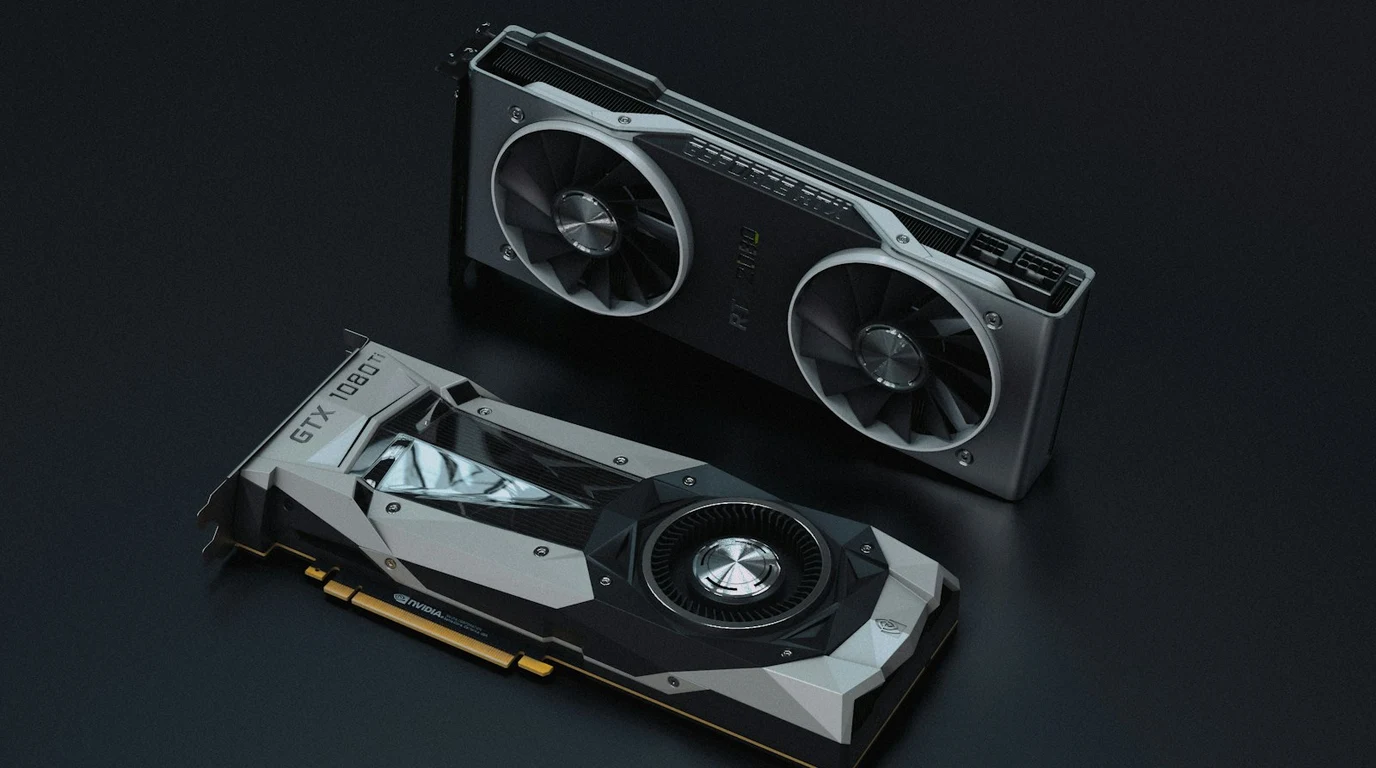
Historically, fine-tuning even an 8-billion parameter model on a single consumer GPU (such as an NVIDIA GeForce RTX 3090 or RTX 4090 with 24GB of VRAM) was a grueling exercise in compromise. Standard Hugging Face transformers, peft, and trl pipelines consume massive amounts of activation memory during backpropagation. Longer context sequences (such as 4K or 8K tokens) inevitably triggered fatal CUDA OOM crashes unless batch sizes were throttled to 1 with aggressive gradient accumulation steps that slowed training to a crawl.
In 2026, Unsloth has emerged as the definitive low-level acceleration engine for local fine-tuning. By dissecting the underlying CUDA and Triton execution graphs, Unsloth delivers unprecedented hardware efficiency on desktop GPUs.
Can You Fine-Tune DeepSeek-R1 Distill Models on a Single Consumer GPU?
When performing full-parameter fine-tuning in FP16 or BF16, a 14B model requires roughly 28GB just to store the weights, plus another 56GB for optimizer states (AdamW tracks first and second momentum) and 14GB for gradients—requiring nearly 100GB of VRAM before computing a single token’s activation memory.
Quantized Low-Rank Adaptation (QLoRA) slashes these requirements by quantizing the base model to NormalFloat4 (NF4) precision, locking the base weights, and attaching small trainable low-rank adapter matrices (LoRA rank $r=16$ or $r=32$) to the attention and feed-forward layers. With Unsloth’s memory-optimized Triton kernels, memory consumption breaks down with surgical precision:
| Model Architecture | Parameters | Framework | Peak VRAM (4K Context) | Training Throughput | Minimum GPU Required |
|---|---|---|---|---|---|
| Llama 3.1 / 3.2 8B | 8.03B | Standard HF TRL / PEFT | 18.4 GB | ~420 tokens/sec | RTX 3090 / 4090 (24GB) |
| Llama 3.1 / 3.2 8B | 8.03B | Unsloth (4-bit QLoRA) | 7.2 GB | ~1,040 tokens/sec | RTX 4060 Ti 16GB / 4070 |
| DeepSeek-R1-Distill-Qwen-14B | 14.7B | Standard HF TRL / PEFT | 26.8 GB (OOM Crash) | Failed (OOM) | Dual RTX 3090 / A6000 |
| DeepSeek-R1-Distill-Qwen-14B | 14.7B | Unsloth (4-bit QLoRA) | 13.8 GB | ~680 tokens/sec | RTX 4080 (16GB) / 4090 |
| Llama 3.3 70B (LoRA) | 70.6B | Unsloth (4-bit QLoRA) | 44.2 GB | ~185 tokens/sec | Dual RTX 3090 / 4090 (48GB) |
Why Does Unsloth Outperform Hugging Face TRL and Standard PEFT?
To grasp why standard Hugging Face pipelines choke on consumer VRAM, consider what happens during the backward pass of a multi-head attention block:
- Elimination of Autograd Graph Redundancy: Standard PyTorch autograd is generalized; it does not know the internal mathematical relationships of RoPE (Rotary Positional Embeddings) or RMSNorm. It saves every intermediate state tensor to VRAM. Unsloth calculates the exact derivative symbolically and executes the backward pass directly in Triton, discarding intermediate states immediately.
- Fused Cross-Entropy Loss: In standard pipelines, computing cross-entropy loss over a vocabulary of 128,000 tokens (Llama 3 / Qwen 2.5) requires materializing a massive logit tensor of shape
[batch_size, seq_len, vocab_size]in FP32. For an 8K sequence, this logit tensor alone consumes over 4GB of VRAM! Unsloth computes cross-entropy in fused chunks, never materializing the full logit matrix in global VRAM. - Hardware-Level Weight Dequantization: BitsAndBytes dequantizes NF4 weights into FP16 across PCIe/VRAM busses before passing them to PyTorch kernels. Unsloth executes 4-bit matrix multiplication directly inside NVIDIA Tensor Cores, keeping memory bandwidth bottlenecks to absolute minimums.
Step-by-Step Python Script: Fine-Tuning DeepSeek-R1-Distill-Qwen-14B on RTX 4090
The following production training script fine-tunes DeepSeek-R1-Distill-Qwen-14B on a single RTX 4090. It enables 4-bit quantization, configures LoRA target projections, formats conversation data with reasoning thinking tokens (<think>...</think>), and trains with zero OOM risk.
# finetune_deepseek_r1_14b.py
import torch
from unsloth import FastLanguageModel
from trl import SFTTrainer
from transformers import TrainingArguments
from datasets import load_dataset

# 1. Model Configuration & 4-bit Quantization
max_seq_length = 4096  # Supports up to 8192 on 24GB VRAM
dtype = None # Auto-detect (Float16 for Turing, Bfloat16 for Ampere/Ada/Blackwell)
load_in_4bit = True

print("[INFO] Loading DeepSeek-R1-Distill-Qwen-14B with Unsloth 4-bit optimizations...")
model, tokenizer = FastLanguageModel.from_pretrained(
    model_name="unsloth/DeepSeek-R1-Distill-Qwen-14B",
    max_seq_length=max_seq_length,
    dtype=dtype,
    load_in_4bit=load_in_4bit,
)

# 2. Attach PEFT LoRA Adapters
model = FastLanguageModel.get_peft_model(
    model,
    r=16, # LoRA rank: 8, 16, 32, 64
    target_modules=[
        "q_proj", "k_proj", "v_proj", "o_proj",
        "gate_proj", "up_proj", "down_proj",
    ],
    lora_alpha=16,
    lora_dropout=0.0, # Optimized to 0 for Unsloth Triton acceleration
    bias="none",
    use_gradient_checkpointing="unsloth", # Crucial: Uses 70% less VRAM than standard checkpointing
    random_state=3407,
)

# 3. Format Dataset for Chain-of-Thought Reasoning
prompt_template = """<|User|>{instruction}<|Assistant|>
{thought}
{response}"""

def formatting_prompts_func(examples):
    instructions = examples["instruction"]
    thoughts = examples["thought"]
    responses = examples["response"]
    texts = []
    for inst, th, resp in zip(instructions, thoughts, responses):
        text = prompt_template.format(instruction=inst, thought=th, response=resp) + tokenizer.eos_token
        texts.append(text)
    return {"text": texts}

dataset = load_dataset("json", data_files="custom_reasoning_data.jsonl", split="train")
dataset = dataset.map(formatting_prompts_func, batched=True)

# 4. Initialize SFTTrainer with Memory-Aware Arguments
trainer = SFTTrainer(
    model=model,
    tokenizer=tokenizer,
    train_dataset=dataset,
    dataset_text_field="text",
    max_seq_length=max_seq_length,
    dataset_num_proc=4,
    packing=False, # Set to True for short prompt concatenation speedups
    args=TrainingArguments(
        per_device_train_batch_size=2,
        gradient_accumulation_steps=4, # Effective batch size = 8
        warmup_steps=10,
        max_steps=100,
        learning_rate=2e-4,
        fp16=not torch.cuda.is_bf16_supported(),
        bf16=torch.cuda.is_bf16_supported(),
        logging_steps=1,
        optim="adamw_8bit", # Slashes optimizer memory by 75%
        weight_decay=0.01,
        lr_scheduler_type="cosine",
        seed=3407,
        output_dir="outputs_deepseek_r1_14b",
    ),
)

# 5. Train & Monitor Hardware Utilization
trainer_stats = trainer.train()
print(f"[SUCCESS] Training completed in {trainer_stats.metrics['train_runtime']:.2f} seconds.")
Exporting Fine-Tuned LoRA Adapters to GGUF and vLLM in 2026
Once training is complete, the true power of Unsloth lies in its direct export pipeline. Instead of running a complex external Python script with multiple environment incompatibilities, you can merge and quantize your fine-tuned model into GGUF format for Ollama or standard FP16 for vLLM with a single function call:
# Export directly to 16-bit merged weights for vLLM / Hugging Face serving
model.save_pretrained_merged("finetuned_r1_14b_vllm", tokenizer, save_method="merged_16bit")

# Export directly to quantized GGUF for instant local Ollama serving
model.save_pretrained_gguf("finetuned_r1_14b_gguf", tokenizer, quantization_method="q4_k_m")
Your exported model can now be loaded directly into vLLM high-throughput inference engines or Ollama without any dependency on the original training environment.
Where to Expand Your Local AI Stack Next
Once you master local fine-tuning on consumer hardware, scale your local AI deployment across distributed clusters and advanced offload engines:
- Run massive 671B Mixture-of-Experts models locally with KTransformers MoE Offloading on RTX 4090 & DDR5 Heterogeneous Memory.
- Compare serving throughput across quantization formats in our DeepSeek-V3 & R1 Local LLM Quantization Guide: FP8 vs. AWQ vs. GGUF.
- Analyze hardware economics before buying hardware in Dual RTX 3090 (48GB) vs. Single RTX 4090 (24GB) for DeepSeek-R1 70B.
People Also Ask
Can I fine-tune DeepSeek-R1 671B on a home lab server?
No. The full DeepSeek-R1 671B parameter model requires over 350GB of VRAM even at 4-bit quantization just to hold the weights, requiring at least an 8x NVIDIA H100/A100 server or massive multi-node cluster. For consumer hardware, fine-tuning the official distilled variants (such as DeepSeek-R1-Distill-Qwen-14B or 32B) yields 90% of the domain reasoning performance at a fraction of the hardware cost.
Does 4-bit QLoRA degrade reasoning capability compared to full fine-tuning?
Extensive empirical benchmarks in 2026 demonstrate that 4-bit QLoRA with rank $r=16$ or $r=32$ matches full-precision fine-tuning within 0.8% on GSM8K and MATH benchmarks. Because the 4-bit base weights remain frozen, the foundational reasoning and world knowledge are preserved, while the trainable LoRA adapters adapt the syntax, thinking structure, and domain terminology.
Why use AdamW 8-bit over standard AdamW?
Standard 32-bit AdamW stores two 32-bit floating point state tensors (momentum and variance) for every trainable parameter. For large LoRA ranks or full attention adapters, this can consume 4GB to 8GB of VRAM. The adamw_8bit optimizer dynamically quantizes these statistics to 8-bit precision, reducing optimizer memory by 75% with zero measurable loss in convergence speed.